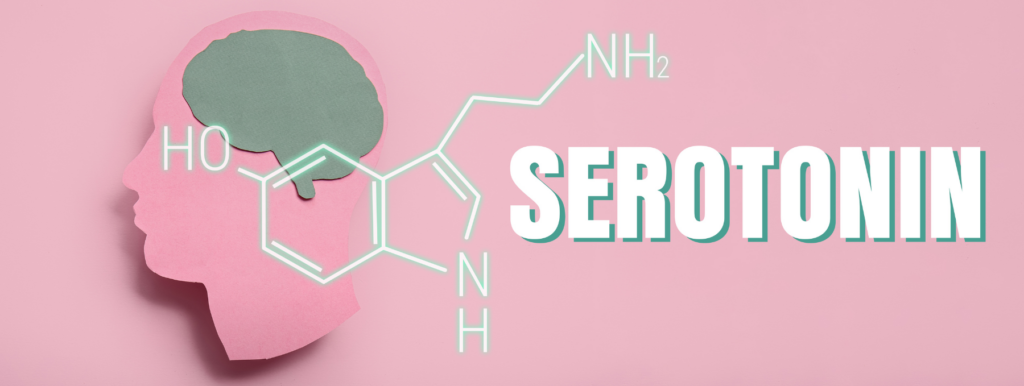

Serotonin (also known as 5‑hydroxytryptamine or 5‑HT) is best known for its role in mood, sleep and well‑being. But this versatile neurotransmitter does much more than influence mood: It also helps shape how we feel pain. The relationship between serotonin and pain is complex. Depending on where it acts in the body and which receptor it binds to, serotonin can either quiet pain signals or amplify them. Understanding this dual role helps explain why some medications that affect serotonin can change pain levels, and why pain disorders can be so difficult to treat.
Serotonin: Its Origin and Actions
 Serotonin is produced in two main places in the body. Most of it (about 90%) is made in the gut by specialized cells in the intestinal lining. The rest is produced in the brain by neurons in the raphe nuclei, a group of cell bodies in the brainstem. The serotonin made in the brain travels along nerve pathways to influence many functions, including sleep, appetite, mood and the control of sensory signals such as pain.
The body has many different serotonin receptors — at least 14 subtypes grouped into seven families labeled 5‑HT1 through 5‑HT7. These receptors are distributed widely throughout the body and are present on peripheral nerves and immune cells as well as on sensory neurons that carry pain signals up the spinal cord. They are also found on neurons and circuits in the spinal cord and brain that amplify, dampen or interpret those signals. Which receptor types are present in a particular location and how active they are determines whether serotonin acts to increase or decrease pain.
How Serotonin Can Increase Pain
After an injury — for example, a cut, sprain or inflammation — peripheral tissues release a cocktail of signaling molecules, including serotonin. This peripheral serotonin acts on receptors on nearby pain-sensing nerve endings called nociceptors and on local immune cells, producing or enhancing pain and tenderness. In other words, peripheral serotonin contributes to the local sensitization that makes a stubbed toe or inflamed joint hurt more than an uninjured counterpart.
Certain serotonin receptors are particularly tied to pain promotion. For example, the 5‑HT3 receptor is found on some sensory nerves and in the spinal cord, thus activating it can increase the transmission of painful signals. The 5‑HT2 family of receptors can also make pain worse in some situations. Additionally, after nerve injury or in chronic pain, the expression and balance of receptor subtypes can change. Those changes may tip the net effect of serotonin toward facilitating pain instead of inhibiting it.
How Serotonin Can Reduce Pain
Serotonin produced in the brain contributes to a well‑known pain control system called descending modulation. In brief, the brain sends signals down the spinal cord that can dial up or down the flow of pain messages traveling to the brain. Serotonergic neurons in the brainstem are a major component of this descending system. When they fire, they release serotonin in the spinal cord, where it can switch off pain signals there, reducing pain.
Several receptor subtypes in the spinal cord are associated with this pain‑inhibiting effect. Members of the 5‑HT1 receptor family (for example, 5‑HT1A and 5‑HT1B) are often linked to pain-reducing actions. Other receptors — like 5‑HT4 and 5‑HT7 — also seem to support pain reduction in some experimental settings. Because of these inhibitory pathways, drugs or brain activity that enhance descending serotonergic signaling can help lessen pain.
Serotonin and Pain: Why the Effects Seem Contradictory
 It might seem contradictory that serotonin can both worsen and relieve pain. The explanation lies in multiple factors. Firstly, different serotonin receptor types trigger different responses: Activating one receptor can block pain signals while another can amplify them. Location matters too—serotonin released at an injury site usually increases pain, whereas serotonin sent from brainstem cells into the spinal cord can suppress it.
The body’s state also changes the balance. In healthy acute situations descending serotonin pathways often reduce pain, but after nerve injury or in chronic pain the mix of receptors and neurotransmitters can shift so serotonin promotes pain. Finally, serotonin doesn’t act alone—it interacts with norepinephrine, opioids and inflammatory mediators, and those interactions help determine whether the net effect is pain relief or pain enhancement.
Clinical Implications: Medications and Pain
Because serotonin plays a role in pain modulation, many drugs that influence serotonergic signaling also affect pain — sometimes in surprising ways.
- Antidepressants: Certain antidepressants that increase serotonin (SSRIs) or both serotonin and norepinephrine (SNRIs) are commonly used to treat chronic pain conditions such as neuropathic pain and fibromyalgia. SNRIs (like duloxetine and venlafaxine) are better backed by evidence for easing pain. They raise both serotonin and norepinephrine levels, which strengthens the brain’s downward pain‑blocking signals to the spinal cord, so pain is reduced. SSRIs produce more variable pain effects, perhaps because serotonin alone can have mixed actions depending on receptor targeting and location.
- Serotonin receptor drugs: Some medications target specific 5‑HT receptors. For example, drugs that block 5‑HT3 receptors (ondansetron is an example) have been explored for certain pain conditions with mixed outcomes. Drugs that activate 5‑HT1 receptors (such as triptans used for migraine) relieve pain in migraine by acting on these receptors both centrally and on blood vessels.
- Opioid interaction: Serotonin systems affect how well opioid painkillers work. Some evidence suggests serotonin contributes to opioid pain relief and may also play a role in opioid tolerance and side effects.
It is important to note that because serotonin affects many systems, drugs that increase serotonin carry a risk of serotonin syndrome when combined with other serotonergic agents. Also, drugs that alter serotonin may have differing effects on pain depending on dose, condition and individual biology.
What This Means for People With Pain
Pain isn’t just a direct signal from injured tissue—your nervous system actively processes and alters that signal, and serotonin-containing brain circuits are a key part of that control. Medicines that change serotonin levels can help some types of pain—especially chronic nerve-related or centrally amplified pain—but they don’t work the same for every kind of pain. What’s more, after nerve injury, shifts in serotonin receptor types can make chronic pain harder to treat than acute pain.
 Because serotonin’s effects depend on receptor subtype, location and interactions with other systems, researchers are still studying which receptors do what in different pain conditions and how receptor expression changes after injury. The most effective care usually combines multiple strategies: medications that target serotonin and norepinephrine, plus physical therapy and behavioral approaches that strengthen the brain’s pain-blocking systems, such as exercise, stress reduction and cognitive techniques. At the same time, future treatments aim to harness serotonin’s pain‑reducing potential without causing pain‑promoting or systemic side effects.
Serotonin’s Mixed Role in Pain
Serotonin is a key modulator of pain. It can dampen pain when acting in descending brain-to-spinal pathways and on particular receptors, and it can promote pain when released peripherally or when different receptor subtypes are activated. The net effect in any person or condition depends on receptor subtype, anatomical location and the state of the nervous system. This nuanced role helps explain why serotonergic drugs can be both helpful and unpredictable in treating pain.