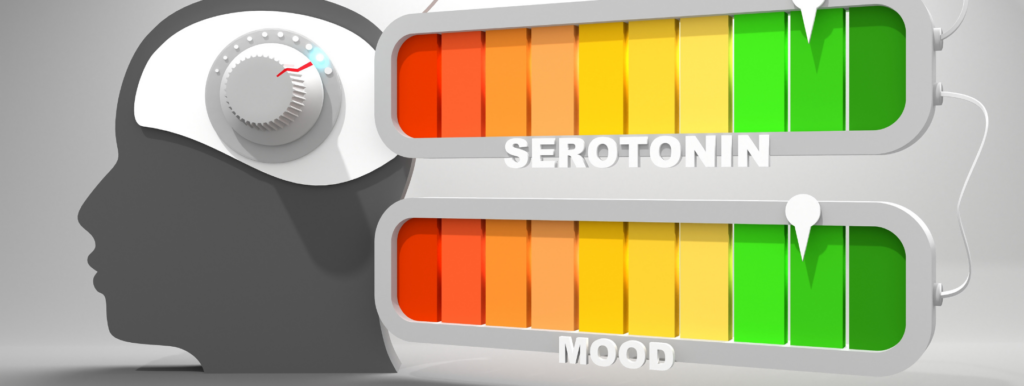

Serotonin (5‑HT) influences mood, sleep, appetite and cognition, so levels of this important neurotransmitter are often measured in psychiatry and neuroscience. Measuring serotonin is tricky: Blood or urine tests usually don’t reflect central/CNS (brain) levels and different tests capture different pools of serotonin, for example platelet stores, free plasma serotonin or the metabolites that are created when serotonin is broken down. Thus, some tests reflect peripheral (body) serotonin, others only indirectly suggest central (brain) activity and none directly measure the amount of serotonin in the brain’s synapses. Below is a review of common techniques used to test serotonin levels, what each can—and cannot—reveal about central versus peripheral serotonin and key practical limitations.
Overview: Why Trying to Test Serotonin Levels is Complicated
 Measuring serotonin is complicated for several reasons. First, serotonin exists in two distinct pools separated by the blood–brain barrier (BBB). Most peripheral serotonin is made in the gut and stored in platelets, while the brain produces its own serotonin via an enzyme called TPH2. As a result, peripheral serotonin measurements often do not reflect brain serotonin levels. Second, researchers can measure either serotonin itself or its main metabolite, 5‑HIAA. Because 5‑HIAA reflects how much serotonin is being broken down, it’s used as an indirect marker of turnover rather than a direct measure of how much serotonin is actually present in the central nervous system or periphery.
Third, serotonin breaks down easily and is found at very different levels in plasma, platelets, cerebrospinal fluid and tissue, so how samples are handled and which test is used can strongly change the result. Different goals require different methods: Clinical screens (for example for carcinoid tumors), studies of brain neurotransmission and animal experiments on brain kinetics each use distinct, appropriate techniques to test serotonin levels.
Peripheral Blood Measurements
Below we will discuss the most common peripheral blood measurements used to assess the amount of serotonin outside of the brain and central nervous system, what each method measures, exactly how each test measures serotonin and the main interpretive limits of each.
Serum Serotonin
Serum serotonin reflects the total serotonin released by platelets during clotting, so values are typically higher than plasma serotonin levels because platelets dump their stored serotonin as blood clots. Serum serotonin is measured in the lab using ELISA (an antibody test), HPLC with electrochemical detection (a chemical separation and sensing method) or LC‑MS/MS (high‑precision chemical identification using mass spectrometry).
Serum serotonin mainly reflects platelet stores and, indirectly, gut‑derived serotonin, so it’s useful for peripheral clinical or research questions but does not show levels of brain serotonin. Results are very sensitive to sample handling such as delays to centrifugation, clotting time and temperature. What’s more, platelet activation during collection can falsely raise levels.
Plasma (Platelet‑Poor) Serotonin
Plasma (platelet‑poor) serotonin measures the small amount of free serotonin circulating in plasma after platelets have been removed. It is assayed using HPLC, LC‑MS/MS or ELISA. Only a tiny, inconsistent amount of serotonin is free in blood plasma, so it’s only helpful for answering a few specific questions about signaling outside the brain and is difficult to measure accurately. Getting accurate results requires very sensitive assays and careful sample handling to avoid platelet contamination.
Platelet Serotonin Content
Platelet serotonin content measures the amount of serotonin stored inside platelets. To obtain it, platelets are isolated by centrifugation, their membranes broken open and serotonin quantified using HPLC or LC‑MS/MS, and occasionally by immunoassay. Platelets absorb serotonin from the body and store it, so how much serotonin they contain reflects gut‑derived serotonin and can change with tryptophan obtained via the diet, some drugs and illnesses. It is important to note that this method still measures peripheral stores, not serotonin made by brain neurons.
Urine and Metabolite Assays
Below are common urine- and metabolite-based assays for assessing serotonin metabolism, what each method measures, how they test serotonin levels and their main interpretive limits.
Urinary 5‑HIAA (5‑hydroxyindoleacetic Acid)
Urinary 5‑HIAA is the main stable metabolite of serotonin measured in urine, usually from an overnight or 24‑hour collection that is analyzed by HPLC or LC‑MS/MS. Clinically it’s the standard test for carcinoid syndrome, which involves tumors that make excess serotonin. High levels mean increased peripheral serotonin breakdown. It says little about brain serotonin because it mainly reflects the body’s serotonin production. Test results can also be affected by diet and some medications, such as foods high in serotonin or tryptophan.
 Plasma or CSF 5‑HIAA
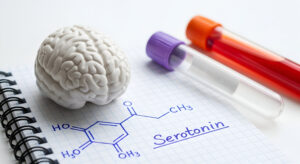
Plasma and CSF 5‑HIAA measure the serotonin metabolites in blood or cerebrospinal fluid using HPLC or LC‑MS/MS. Plasma 5‑HIAA reflects peripheral (body) serotonin metabolism, while CSF 5‑HIAA—which must be obtained via lumbar puncture—serves as the closest routine indirect marker of brain serotonin turnover in humans and has been linked to some psychiatric and behavioral conditions. A lumbar puncture is an invasive procedure, and measuring 5‑HIAA in cerebrospinal fluid (CSF) only shows overall brain serotonin turnover, not levels in specific brain areas. Metabolite levels reflect how much serotonin is being broken down and cleared over time, not the moment-to-moment serotonin levels at synapses.
Direct Brain Measures and Specialized Research Methods
Below are broken down direct brain and specialized research methods used to study serotonin in the central nervous system, what each method measures and each method’s main strengths and limitations.
Microdialysis
Microdialysis, used mostly in animals, samples the fluid outside brain cells in a small region by inserting a tiny probe, collecting the fluid and measuring serotonin with HPLC or LC‑MS. It gives time‑resolved, region‑specific data useful for animal experiments and is rarely used in humans. It is an invasive method, and the collected sample usually underestimates the true extracellular level of serotonin.
PET Imaging
PET imaging involves injecting a radioactive tracer that binds to serotonin receptors or the serotonin transporter. The scanner then shows where and how much binding occurs. PET maps receptor or transporter availability across brain regions and can suggest changes in signaling, but it does not measure actual serotonin concentration. PET imaging is also expensive and complex.
Postmortem Tissue Assays
Postmortem methods analyze dissected brain tissue to measure serotonin, its metabolites, enzyme levels (TPH1/TPH2) and receptor densities using biochemical tests, immunohistochemistry, HPLC or LC‑MS. These methods give direct, detailed molecular information but can only be done after death or in animal studies.
Emerging Tools: Biosensors and Electrochemical Methods
New techniques such as genetically encoded fluorescent sensors and fast electrochemical probes can record real‑time serotonin changes with high time resolution, mainly in animals. These methods hold promise for mechanistic work but are not yet routine clinical tools.
Assay Choice and Clinical vs. Research Applications
Assay choice affects accuracy. HPLC with electrochemical detection and LC‑MS/MS are the most specific and sensitive because they separate and directly quantify serotonin and its metabolites. ELISAs are easier to run in some clinical labs but can cross‑react with other molecules and be less reliable at low levels.
Pick the method based on the specific type of chemical or component being measured, the expected concentration, how specific the results must be and what equipment is available. For clinical screening of peripheral serotonin excess (for example in testing for carcinoid tumors), 24‑hour urinary 5‑HIAA by LC‑MS or HPLC—or plasma serotonin with strict preanalytic control—is preferred. Central serotonin research typically uses CSF 5‑HIAA, PET imaging or invasive microdialysis in animals. Studies of peripheral serotonin use platelet content and plasma/serum assays.
Key Interpretive Cautions and Practical Recommendations
 Peripheral tests don’t reliably show brain serotonin because the blood–brain barrier keeps central and peripheral serotonin pools separate and different enzymes (TPH1 vs TPH2) control the synthesis of serotonin in each pool. Levels of serotonin metabolites reflect overall turnover and clearance, not moment‑to‑moment synaptic signaling. Blood results are very sensitive to handling (for example delays, temperature and platelet activation) and can be altered differently than brain measures by drugs, such as SSRIs and MAO inhibitors, or diet.
Choose the test to match the question. Use CSF metabolites or brain imaging for central processes and plasma/platelet/urine tests for peripheral issues. Prefer HPLC or LC‑MS/MS for accuracy when possible and standardize collection and processing — for example fasting, timing, anticoagulant and centrifugation speed/temperature — to reduce variability.
Choosing and Interpreting Methods That Test Serotonin Levels
There isn’t one universal serotonin level within the body — values differ by tissue. Pick a testing method based on whether peripheral or brain serotonin information is needed and by what matters most: accuracy, invasiveness, time resolution or clinical practicality. Know each method’s strengths and limits—blood, urine, CSF, imaging and direct brain techniques—to interpret results correctly and choose the right test for clinical or research needs.