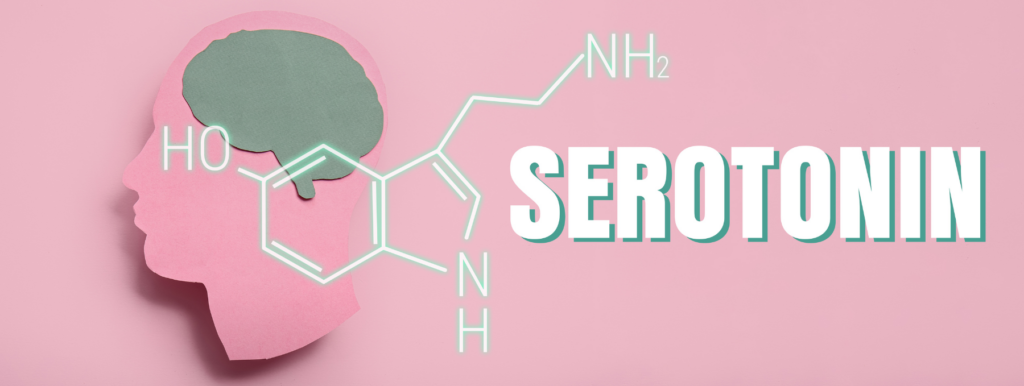

Estrogen and serotonin are two powerful neuromodulators that shape mood, cognition and behavior. The interaction between these important substances helps explain why women are more susceptible to mood changes across reproductive milestones like puberty, menstrual cycles, pregnancy/postpartum and perimenopause/menopause, and why tailored approaches to mental health matter. Here we will explain the biology of the estrogen–serotonin relationship and review clinical implications, while also highlighting practical takeaways for women.
The Connection Between Estrogen and Serotonin
 Estrogen’s primary connection to serotonin is that it helps increase and preserve serotonin in a variety of different ways. Estrogen can boost serotonin production by increasing levels of tryptophan hydroxylase (TPH), the enzyme that initiates serotonin synthesis. It is also able to slow the breakdown of serotonin by reducing levels of monoamine oxidase (MAO), the enzyme that destroys it, prolonging serotonin’s availability within the body.
What’s more, estrogen influences serotonin reuptake, helping to keep more serotonin active between nerve cells. Normally, a protein transporter called SERT clears serotonin from the gap (synapse) between nerves. When estrogen reduces the amount of SERT or its activity, serotonin stays in the gap longer and has more of an effect. That’s one reason changes in estrogen can affect how well SSRIs (a common type of antidepressant) work.
At the receptor level, estrogen alters the expression and sensitivity of several serotonin receptor subtypes, notably 5‑HT1A and 5‑HT2A, shifting how brain neurons respond to serotonin. For example, in some brain areas (like the raphe nuclei), estrogen can make the 5-HT1A autoreceptors less sensitive, which increases serotonin neuron firing and boosts serotonin release. These effects happen two ways — fast signaling at the cell membrane and slower changes that affect gene activity — so some effects are immediate and others build over time. Additionally, the exact effects vary by brain region (raphe nuclei, hippocampus and prefrontal cortex matter most for mood) and on whether estrogen changes are short-term or sustained.
Why These Interactions Matter for Women
Hormone-driven changes in estrogen interact with serotonin in ways that directly affect mood and emotional regulation. Understanding this link helps explain why women often experience predictable mood shifts at certain life stages. The sections below outline how these interactions play out across the menstrual cycle, pregnancy/postpartum and perimenopause/menopause and how they influence depression rates and treatment choices.
Reproductive-cycle Mood Variability
Many women experience mood shifts throughout the menstrual cycle. In the late luteal phase when estrogen and progesterone levels fall, some women develop premenstrual syndrome (PMS) or the more severe premenstrual dysphoric disorder (PMDD). One explanation is that falling estrogen levels reduces serotonergic tone, amplifying susceptibility to mood symptoms in serotonin‑sensitive individuals.
Postpartum Period
Pregnancy features high and sustained estrogen levels, which drop sharply after childbirth. This sudden decline in estrogen may reduce serotonergic support, contributing to postpartum blues and, in vulnerable cases, postpartum depression. That hormonal change interacts with psychosocial stressors and sleep deprivation, increasing risk.
 Perimenopause and Menopause
Perimenopause is marked by fluctuating and eventually declining estrogen levels. Rates of new‑onset depression increase in perimenopausal women, and many report worsening anxiety or mood instability. Reduced estrogenic modulation of serotonin is a plausible physiological contributor. In some studies, estrogen therapy helps mood symptoms in perimenopausal women—particularly those with recent onset mood change linked temporally to reproductive transition.
Sex Differences in Depression Prevalence
Women are about twice as likely as men to experience major depressive disorder across the lifespan. While social and psychological factors are crucial, sex‑specific neurobiology—like estrogen’s regulation of serotonin—helps explain differential vulnerability, timing and symptom profiles, for example the greater mood variability that’s tied to reproductive events.
Treatment Implications
Because estrogen affects serotonin synthesis, breakdown, receptors and reuptake, hormonal status can influence response to antidepressants, especially SSRIs. Some clinical trials suggest estrogen replacement can augment SSRI effects in perimenopausal women or improve depressive symptoms when hormonal decline is a major driver. Conversely, SSRIs can be effective first‑line treatments for PMDD, highlighting a direct serotonergic mechanism.
Clinical Evidence and Nuances
Research combining observation and trials shows a link between reproductive stage and mood, though results vary by context. Randomized trials have shown that estrogen therapy can reduce depressive symptoms for some perimenopausal women, but evidence is mixed for treating major depression in younger women outside reproductive transitions. For postpartum depression, trials of estrogen therapy have yielded inconsistent results, in part because of differences in dosing, concerns about breastfeeding and small study sizes.
Individual responses to estrogen fluctuations vary widely. Genetic differences like differences in serotonin‑related genes, past mental health history, stress levels and personal sensitivity to hormonal change all influence who will experience mood effects from estrogen fluctuations. Conditions like PMDD appear to reflect an abnormal sensitivity to otherwise normal hormonal shifts rather than persistently abnormal hormone levels.
Finally, hormone therapy has potential benefits for mood and other menopausal symptoms but also carries medical risks that depend on age, dose, delivery method and overall health. Decisions about estrogen therapy should balance psychiatric benefits against cardiovascular, cancer and metabolic risks. Proven nonhormonal options—SSRIs/SNRIs, cognitive behavioral therapy and lifestyle measures—should remain important first‑line or adjunctive approaches.
Practical Takeaways for Women and Clinicians
Women who notice mood changes should track when symptoms occur in relation to their menstrual cycle, pregnancy or postpartum timing or perimenopausal changes, since clear patterns (for example, repeated symptoms in the luteal phase or new depression coinciding with perimenopause) can point to hormone‑related causes and guide treatment. For mood disorders that clearly relate to reproductive transitions, clinicians should consider hormonal influences when choosing treatments and may discuss the pros and cons of hormonal therapy as part of a broader plan.
First‑line treatments for many depressive and anxiety disorders remain SSRIs and psychotherapy. SSRIs often work quickly for PMDD even when taken only during the luteal phase, and short‑term estrogen therapy can be considered for perimenopausal depression in collaboration with gynecologic and primary care providers. Lifestyle factors like sleep, exercise, diet and social support also matter because they affect mood and serotonin function. Additionally, treating medical comorbidities like thyroid disease or metabolic problems is important.
Care should be individualized: Genetic testing for serotonin‑related genes is not yet standard practice, but may emerge as part of personalized approaches. Meanwhile, clinicians should tailor care to symptom timing, severity, risk factors and personal preferences.
Research Directions and Open Questions
Researchers are still working to fill key gaps. Studies in animals and people are trying to pinpoint which estrogen receptor types and brain circuits drive changes in serotonin, and to distinguish fast, non‑genomic effects from slower, gene‑level effects on mood and behavior. We also need larger,  better‑controlled clinical trials to identify which groups of women are most likely to benefit from hormone therapy, what doses and treatment durations work best and how to safely combine hormones with antidepressants. Finally, finding reliable biomarkers that predict who is especially sensitive to hormonal shifts could allow earlier prevention and more targeted treatments for PMDD, postpartum depression and perimenopausal mood disorders.
- Mechanistic clarity: Animal and human studies continue to clarify which estrogen receptors affect serotonin in different brain areas and how fast (non‑genomic) versus slow (genomic) effects lead to different behavior changes.
- Optimal interventions: We still need larger, well‑controlled trials to determine which subgroups of women benefit most from hormone therapy for mood, optimal dosing regimens and how to combine hormonal and antidepressant strategies safely.
- Biomarkers of sensitivity: Identifying biological markers that predict who is sensitive to hormonal shifts could improve prevention and targeted treatment for PMDD, postpartum depression and perimenopausal mood disorders.
Estrogen and Serotonin: Toward More Personalized Women’s Mental Health
Estrogen and serotonin are intimately connected through multiple biological pathways—synthesis, breakdown, reuptake and receptor sensitivity. These interactions help explain why mood often changes during reproductive life events and why women show particular vulnerability to certain mood disorders. Recognizing the link between estrogen and serotonin supports better screening, timing‑sensitive treatment choices and more personalized care for women across the lifespan.