
When most people hear the words Parkinson’s disease, the first neurotransmitter that comes to mind is probably dopamine–and for good reason. Parkinson’s is strongly associated with the loss of dopamine-producing nerve cells in a region of the brain called the substantia nigra. As dopamine levels fall, people can develop the characteristic movement symptoms of Parkinson’s disease, including tremor, muscle rigidity, slowed movement and problems with balance. But dopamine is not the whole story.
Parkinson’s disease affects several different systems in the brain, including the serotonin system. Researchers have increasingly recognized that changes in serotonin signaling may contribute to some of the symptoms of Parkinson’s disease and may even play a role in certain complications of its treatment. This doesn’t mean that low serotonin causes Parkinson’s disease. Rather, it highlights just how complicated the brain chemistry behind Parkinson’s really is.
Parkinson’s Disease: More Than a Dopamine Disorder
 Parkinson’s disease is a progressive neurodegenerative disorder in which certain populations of nerve cells become damaged or die over time. The most well-known are the dopamine-producing neurons in the substantia nigra. Dopamine is an important chemical messenger involved in movement. When dopamine-producing neurons are lost, communication within brain circuits that control movement becomes disrupted. This contributes to many of the motor symptoms associated with Parkinson’s.
However, dopamine-producing neurons aren’t the only nerve cells affected by Parkinson’s. The disease can also affect neurons that produce or regulate other neurotransmitters, including serotonin, norepinephrine and acetylcholine. These systems are involved in functions ranging from mood and sleep to attention, cognition, pain and automatic bodily processes. This helps explain why Parkinson’s can cause many symptoms that don’t look at all like a movement disorder.
What Does Serotonin Have to Do With Parkinson’s?
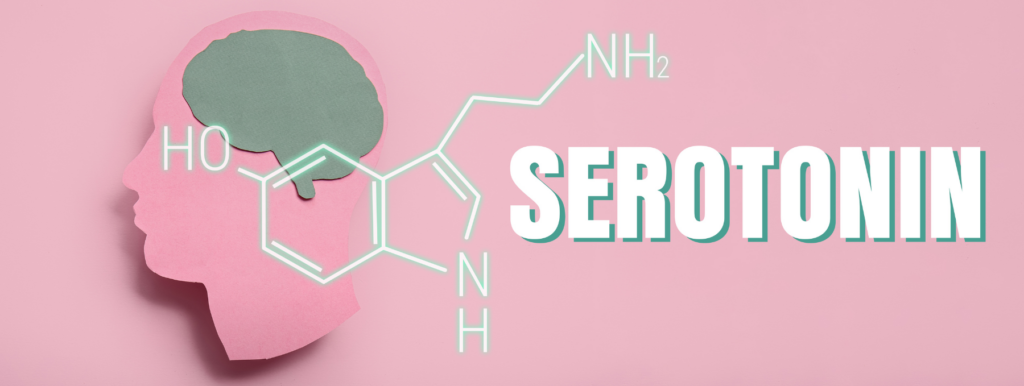
Serotonin is a neurotransmitter involved in a remarkably broad range of functions. It is often described in popular health articles as the brain’s “feel-good” chemical, but that description is an oversimplification. Serotonin helps regulate mood, sleep, appetite, pain processing, cognition and other aspects of brain function. It also interacts with other neurotransmitter systems, particularly dopamine.
In Parkinson’s disease, serotonin-producing neurons and their connections can also become affected. Research has found abnormalities in the serotonergic system in people with Parkinson’s, including changes in serotonin-producing neurons and serotonergic nerve terminals. The degree of serotonergic involvement can vary between sufferers and may change as the disease progresses. This is one reason researchers increasingly view Parkinson’s as a disorder involving multiple interconnected brain systems rather than simply a disease in which dopamine disappears.
Serotonin and the Non-Motor Symptoms of Parkinson’s
One of the most important reasons researchers are interested in serotonin is its potential relationship to the many non-motor symptoms of Parkinson’s disease. These symptoms can sometimes be just as disruptive as the movement problems. Depression and anxiety, for example, are common among people with Parkinson’s disease. Sleep disturbances, fatigue, changes in cognition and certain types of pain can also occur. Because serotonin is involved in mood, sleep and pain processing, researchers have investigated whether serotonergic dysfunction contributes to these symptoms.
The relationship is complicated, however. Depression or anxiety in someone with Parkinson’s cannot simply be attributed to “low serotonin.” Parkinson’s affects numerous brain circuits, and psychological symptoms can result from a combination of biological, psychological and social factors. In some cases, these symptoms may even appear before the classic movement symptoms of Parkinson’s become obvious. That is an important distinction: serotonin dysfunction may be part of the biology of Parkinson’s, but that does not mean that serotonin deficiency is the cause of Parkinson’s disease.
Serotonin and Dopamine Don’t Work in Isolation
One reason the relationship between serotonin and Parkinson’s is so interesting is that neurotransmitters don’t operate as independent systems. The brain is a network, and neurotransmitter systems constantly influence one another. Serotonin can affect dopamine signaling, while dopamine can influence circuits involving serotonin. Both systems also interact with the basal ganglia, a group of brain structures that plays a central role in movement.
This interaction may help explain why changes in one neurotransmitter system can produce effects that aren’t limited to the functions traditionally associated with that neurotransmitter. It also illustrates why the familiar idea that dopamine is responsible for movement and serotonin is responsible for mood is misleading. The reality is considerably more complicated.
An Unexpected Role for Serotonin in Levodopa Treatment
The connection between serotonin and Parkinson’s becomes even more interesting when researchers look at levodopa, the most effective medication for many of the motor symptoms of Parkinson’s disease. Levodopa is converted into dopamine in the brain, helping to compensate for the loss of dopamine-producing neurons. But as Parkinson’s progresses and more dopamine neurons are lost, another population of neurons can become involved in processing levodopa: serotonin-producing neurons.
 Serotonergic neurons have the ability to convert levodopa into dopamine. However, they don’t regulate that dopamine in exactly the same way that normal dopamine neurons do. As a result, serotonin neurons may contribute to fluctuations in dopamine availability after levodopa treatment. This phenomenon is one of several mechanisms researchers believe may contribute to levodopa-induced dyskinesia, the involuntary, often twisting or writhing movements that can develop in some people after long-term levodopa treatment. Researchers have therefore investigated whether modifying serotonin signaling could help reduce these treatment-related movement complications.
This doesn’t mean levodopa is “bad” or that serotonin causes dyskinesia by itself. Levodopa remains one of the most important and effective treatments for Parkinson’s disease. Rather, the serotonin connection provides another piece of the puzzle for understanding why some patients develop complications as the disease and treatment progress.
Could Serotonin Be a Treatment Target?
Because serotonergic dysfunction appears to contribute to some aspects of Parkinson’s disease, researchers have explored medications that influence serotonin receptors and serotonin signaling. The goal isn’t necessarily to increase serotonin throughout the brain. Instead, researchers are investigating whether particular serotonin receptors or pathways could be targeted to address specific symptoms or treatment complications. This is an important distinction because serotonin is involved in many different brain functions. Simply increasing or decreasing serotonin globally would not necessarily produce the desired result.
Some serotonin-related medications are already used clinically to treat particular symptoms in people with Parkinson’s disease, particularly psychiatric symptoms such as depression or anxiety. Other approaches remain areas of research. The field is still evolving, and serotonergic treatments are not currently considered a replacement for therapies aimed at restoring dopamine signaling.
Does Having Low Serotonin Increase Your Risk of Parkinson’s?
There is evidence of serotonergic dysfunction in Parkinson’s disease, but that does not mean that having low serotonin causes Parkinson’s or that measuring serotonin could predict who will develop the disease. Serotonin levels in the brain also cannot be meaningfully reduced to a simple blood test that tells someone whether they have “enough serotonin.” Brain neurotransmission is much more complicated than that. Parkinson’s disease involves changes in neurons, circuits, proteins, neurotransmitters and other biological processes. Scientists are still working to understand exactly how these changes interact and why particular people develop the disease.
What This Teaches Us About the Brain
The connection between Parkinson’s disease and serotonin illustrates a broader lesson about neuroscience. It is tempting to divide neurotransmitters into simple categories: dopamine controls movement, serotonin controls mood and so on. But the brain doesn’t work that way. Neurotransmitters act across interconnected networks, and the same chemical messenger can have very different effects depending on where it is released, which receptor it activates and what other neural circuits are doing at the same time. Parkinson’s disease is a particularly striking example.
The loss of dopamine-producing neurons is central to the disease’s classic movement symptoms, but serotonin and other neurotransmitter systems are also affected. These changes may contribute to non-motor symptoms and may influence how the brain responds to levodopa treatment. Understanding those interactions could eventually lead to more precise treatments—therapies designed not simply to replace a missing neurotransmitter, but to modify specific neural circuits and receptors.
The Bigger Picture of Parkinson’s Disease
 There is a significant connection between Parkinson’s disease and serotonin, but it is not as simple as saying that Parkinson’s is caused by low serotonin. Parkinson’s is best understood as a complex, multisystem neurodegenerative disease. Dopamine loss plays a central role in its characteristic motor symptoms, while changes in the serotonin system may contribute to symptoms such as depression, anxiety, sleep problems, fatigue, pain and other aspects of the disease. Serotonin may also interact with levodopa treatment and contribute to the development of dyskinesias in some patients.
Perhaps most importantly, the serotonin connection reinforces something scientists are increasingly learning about the brain: there is rarely a single neurotransmitter responsible for a single function or disease. The brain is an interconnected network, and understanding diseases such as Parkinson’s requires looking at those connections rather than focusing on one chemical at a time.