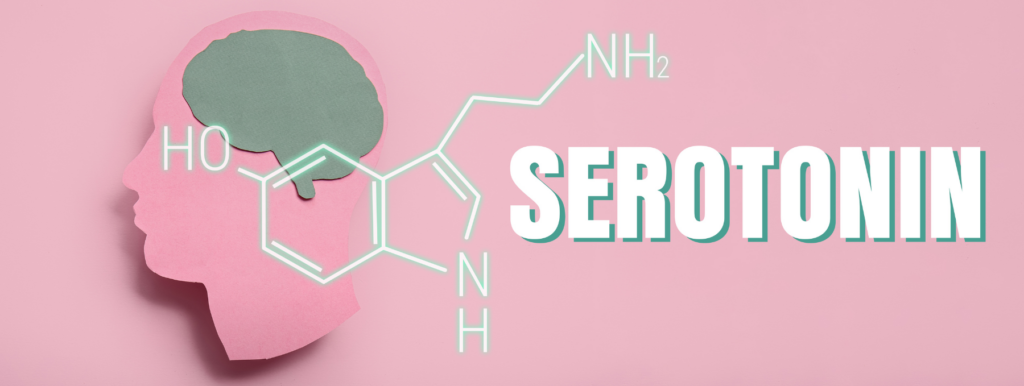

Serotonin is a chemical messenger that helps regulate mood, sleep, appetite and other important functions in the body. Because serotonin is associated with emotional well-being, many people look for natural ways to support its activity. When it comes to serotonin, one food attracting attention is the walnut, a nutrient-rich nut known for its heart-health benefits and potential effects on overall health. A recent study published in Food & Function explored whether eating walnuts daily could improve mood and whether those changes were associated with serotonin metabolism. But do walnuts increase serotonin in the brain, and can eating them help you feel happier? Understanding what the research shows can help separate promising findings from claims that go beyond the evidence.
Do Walnuts Increase Serotonin?
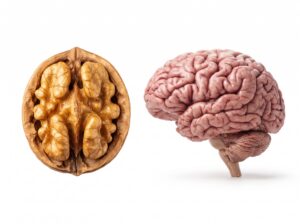 When it comes to the question “Do walnuts increase serotonin?” the short answer is that walnuts may influence processes associated with serotonin metabolism, but researchers have not established that eating walnuts increases serotonin levels in the brain. A recent clinical study found that participants experienced improvements in certain aspects of mood after eating walnuts daily for eight weeks. Researchers also observed changes in a urinary marker associated with serotonin breakdown.
These findings suggest a possible connection between walnut consumption and mood regulation. However, measuring serotonin’s breakdown products does not directly reveal how much serotonin is available in the brain. More research is needed to determine whether walnuts affect brain serotonin and whether such an effect explains the reported mood improvements.
What Did the Walnut and Mood Study Find?
The study, published in Food & Function in 2026, investigated the effects of daily walnut consumption on mood, perceived stress, food cravings and biological markers. Researchers enrolled 31 healthy young adults, most of whom were women, with an average age of approximately 24. Participants consumed 40 grams of walnuts daily for eight weeks and completed a separate eight-week control period without nuts. The order of the two periods was randomized, with a two-week washout period between them. This crossover design allowed researchers to compare each participant’s results during the walnut intervention with their results during the control period.
After the walnut-eating period, participants experienced a statistically significant improvement in overall mood disturbance. Researchers also reported improvements in fatigue, anger and certain food-craving measures. In addition, they observed changes in urinary metabolites associated with serotonin metabolism and gut microbial activity. Although these findings are encouraging, the small sample size and relatively short study duration mean the results should be considered preliminary.
How Does Serotonin Affect Mood?
Serotonin is a neurotransmitter, a chemical messenger that allows cells to communicate. It helps regulate mood, sleep-wake cycles, appetite, digestion and other physiological processes. Serotonin signaling also interacts with other chemical messengers and neural circuits that influence emotional responses and behavior. Although serotonin is often called the body’s happiness chemical, mood is not controlled by serotonin alone. Genetics, stress, sleep, physical activity, hormones and social relationships all contribute to emotional well-being. Depression and anxiety also involve complex mechanisms that cannot be explained by a single neurotransmitter.
Another important distinction is that most of the body’s serotonin is produced in the gastrointestinal tract, where it serves functions related to digestion. Serotonin in the gut does not freely cross the blood-brain barrier. Therefore, a change in serotonin-related activity in the digestive system does not automatically mean that serotonin levels have increased in the brain.
What Does the Serotonin Metabolism Finding Mean?
One of the most interesting findings involved a substance called 5-hydroxyindoleacetic acid, or 5-HIAA. This compound is a major breakdown product of serotonin that can be measured in urine. Researchers use it in certain contexts to investigate serotonin metabolism. During the walnut intervention, participants experienced an increase in urinary 5-HIAA. Greater changes in this marker were also associated with greater improvements in fatigue and overall mood disturbance.
However, an increase in urinary 5-HIAA indicates a change in serotonin breakdown or handling; it does not necessarily mean that more serotonin was available in the brain. The study also cannot establish whether the metabolic change caused the mood improvement or whether both were influenced by another factor. Consequently, the findings support a possible relationship between walnut consumption, serotonin metabolism and mood rather than proving that walnuts directly increase brain serotonin.
How Might Walnuts Influence Mood?
Walnuts contain several nutrients and plant compounds that may contribute to overall health and could potentially influence biological processes associated with emotional well-being.
 Omega-3 Fatty Acids
Walnuts are an excellent plant source of alpha-linolenic acid (ALA), an essential omega-3 fatty acid the body needs for normal physiological functions. Some ALA can be converted into other omega-3 fatty acids, although this conversion is limited. Omega-3 fatty acids help maintain normal cell function and play important roles in the nervous system. Researchers have investigated the relationship between omega-3 intake and mental health, but evidence of mood benefits varies by population and intervention. The walnut study did not establish that ALA was responsible for the observed improvements.
Polyphenols and Antioxidants
Walnuts also contain polyphenols, naturally occurring plant compounds that may influence oxidative stress, inflammation and gut microbial activity. Some of these compounds can be transformed by intestinal bacteria into other biologically active substances. The researchers observed an increase in urinary urolithins during the walnut intervention. These compounds are produced when gut microbes break down certain plant substances, including ellagitannins found in walnuts. Changes in urolithins were associated with changes in the serotonin-related marker, raising questions about how gut microbial activity might relate to mood. However, these associations do not prove that urolithins increase serotonin or directly improve emotional well-being.
Fiber, Magnesium and Other Nutrients
Walnuts also provide fiber, magnesium, folate and other nutrients that contribute to normal bodily functions. Fiber supports digestive health and may provide benefits for anxiety and depression outcomes, while magnesium participates in processes involving nerves and muscles. Folate is important for normal cell function and metabolism. A balanced diet that supplies adequate nutrients supports general health, including normal nervous system function. However, the study did not isolate these nutrients or determine which components, if any, were responsible for the mood-related findings.
How Many Walnuts Should You Eat?
The study used 40 grams of walnuts daily, equivalent to approximately 1.4 ounces or a generous handful. This serving provides beneficial nutrients but also contains roughly 260 calories, depending on the serving size. You can incorporate walnuts into your diet by eating them as a snack, adding them to oatmeal or yogurt or sprinkling them over salads. They can also provide texture and healthy fats in homemade meals.
If you are trying to manage your weight, remember that walnuts are energy-dense. Consider replacing another snack with walnuts rather than simply adding them to your usual diet. The study does not establish that 40 grams is the ideal amount for improving mood or that larger servings would provide greater benefits.
Can Walnuts Help With Depression or Anxiety?
Although the study found improvements in certain mood measures, it did not establish that walnuts treat depression, anxiety or other mental health  conditions. The participants were healthy young adults, not people enrolled because they had a diagnosed psychiatric disorder. The study also had important limitations. It included only 31 participants, lasted eight weeks per dietary period and was not blinded, meaning participants knew when they were eating walnuts. Expectations and other behavioral changes could therefore have influenced self-reported outcomes.
The results also cannot automatically be generalized to older adults or people experiencing menopause, chronic stress or persistent mood symptoms. Eating walnuts can be part of a balanced dietary pattern that supports general health. However, people experiencing ongoing depression or anxiety should not rely on walnuts as a substitute for appropriate professional care.
Can Eating Walnuts Make You Happier?
So, do walnuts increase serotonin? Current evidence suggests that walnuts may influence serotonin metabolism and could help improve certain aspects of mood, but researchers have not demonstrated that eating walnuts increases serotonin levels in the brain. Larger, longer-term trials involving more diverse populations are needed to clarify the effects. In the meantime, walnuts provide plant-based omega-3 fatty acids, fiber and polyphenols. Including them in a balanced diet is a reasonable way to support overall health, even though their specific effects on serotonin and mood remain an active area of research.