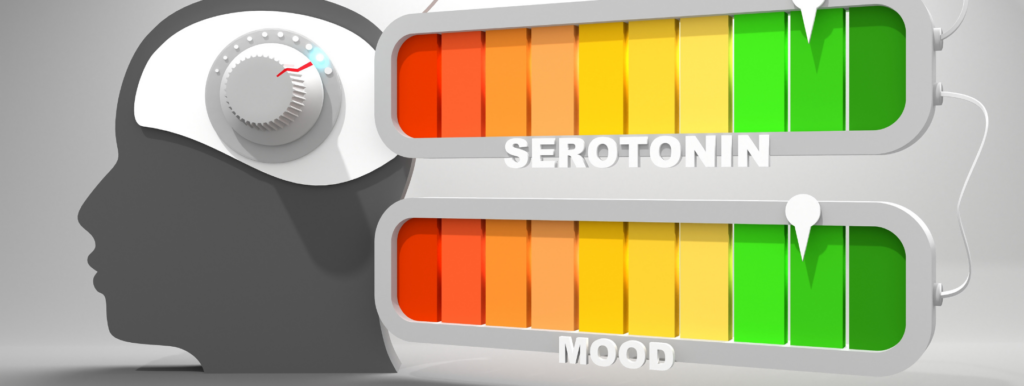

Often called the “feel-good” neurotransmitter, serotonin is widely associated with mood and emotional well‑being. But that common perception misses an important fact: Serotonin exists in two largely separate pools — one inside the brain and central nervous system (CNS or central serotonin), and another throughout the rest of the body (peripheral serotonin). These serotonin pools are produced by different cells, use different enzymes, activate different receptor patterns and serve different functions. Here, we will seek to understand how CNS serotonin differs from peripheral serotonin, helping to explain why some drugs affect mood while also causing nausea, why gut disorders cause systemic symptoms and why altering serotonin in one pool doesn’t straightforwardly change levels in the other.
Two Types of Serotonin: Different Origins and a Critical Barrier
 Both the brain and the body make serotonin from the same dietary building block, the amino acid tryptophan, using two chemical steps: first tryptophan is turned into 5‑HTP, then 5‑HTP is turned into serotonin. However, the CNS pool and peripheral pool use two different versions of the key enzyme that starts this process. One version (TPH2) is mainly found in brain neurons, while the other (TPH1) is mainly found in gut cells. Because different cells make serotonin using different enzyme versions, the brain’s serotonin system (CNS) and the body’s serotonin system (peripheral) operate largely independently.
The brain is protected by the blood–brain barrier (BBB), a filter that prevents many substances in the blood from entering the brain. Serotonin in the blood can’t get into the brain, so the brain makes and controls its own serotonin independently. However, the amino acid tryptophan, which is needed to synthesize serotonin, can pass through the BBB so changing how much tryptophan is in your blood (from food or metabolism) can affect how much serotonin the brain can make. This effect is indirect and depends on how tryptophan competes with other amino acids for transport into the brain.
The Body’s Two Pools of Serotonin and What They Do
As we’ve explored, serotonin exists in two largely separate pools—one inside the brain and spinal cord (CNS or cenral serotonin) and one throughout the rest of the body (peripheral serotonin). Though it’s the same chemical, each pool is made by different cells, controlled in different ways and serves different jobs. Below is a clearer look at where each pool exists and the main functions of each.
CNS/Central Serotonin
CNS serotonin is produced by neurons in the raphe nuclei of the brainstem and sent widely throughout the brain and spinal cord. It helps regulate mood, anxiety, sleep and circadian rhythms, appetite, pain sensitivity, learning and memory and aspects of social behavior and cognitive flexibility. As a neurotransmitter, it’s released at synapses, binds receptors on nearby neurons and is cleared either by reuptake through the serotonin transporter (SERT) or by breakdown via monoamine oxidase (MAO) enzymes.
Peripheral Serotonin
Peripheral serotonin is produced mainly by enterochromaffin cells in the gut, while platelets take up serotonin from the blood. It controls gut motility, secretion and local reflexes. It also helps regulate blood vessel tone and blood clotting (platelet aggregation). What’s more, it takes part in local immune and inflammatory signaling and influences bone and cardiovascular function. When released locally, it acts on receptors in vascular smooth muscle, platelets, immune cells and enteric neurons.
Because they’re synthesized in different sites and are separated by the BBB, CNS and peripheral serotonin pools largely operate independently. This separation explains why, for example, serotonin released in the gut during digestion or following injury affects gut motility and bleeding risk, while brain serotonin modulates mood or pain sensitivity.
Receptors, Transporters, and Enzymes: Similar Toolkit, Different Distribution
 Serotonin acts by attaching to many different receptor types, referred to as 5‑HT1 through 5‑HT7. Some receptor types are found both in the brain and in the body, but where they’re located and what they do can be very different. For example, 5‑HT3 receptors in the gut and brainstem help trigger nausea and vomiting, while 5‑HT1A receptors in the brain are important for controlling anxiety and mood.
Proteins that control serotonin levels—transporters and enzymes—are spread unevenly through the body. SERT, the serotonin transporter, sits on brain neurons and on peripheral cells like platelets and gut neurons. Drugs called SSRIs block SERT and raise serotonin levels outside cells, but the result depends on the tissue.
MAO enzymes (MAO‑A and MAO‑B) break down serotonin, and because they’re found in different places their activity changes how long serotonin lasts locally. Also, two versions of the synthesizing enzyme (TPH1 and TPH2) separate serotonin production in the body and the brain. Because different tissues have different receptors and control systems, the same serotonin molecule can cause very different effects depending on where it’s released.
Clinical and Drug-Related Implications
The separation between CNS and peripheral serotonin has important clinical consequences.
1. Drugs can affect both serotonin pools, producing both intended effects and unintended side effects. Selective serotonin reuptake inhibitors (SSRIs), antidepressant drugs prescribed for depression and anxiety, block SERT and increase serotonin signaling in the brain. By blocking SERT in the brain, SSRIs increase serotonin signaling there to help with depression and anxiety. But SERT is also on gut cells and platelets, so SSRIs can raise serotonin activity in the gut (causing nausea or diarrhea) and reduce platelet serotonin (which can slightly increase bleeding risk). These side effects come from SERT outside the brain, even though the drug’s main target is the brain.
2. Some conditions that raise serotonin outside the brain cause clear physical symptoms. For example, carcinoid syndrome — caused by serotonin‑secreting tumors — leads to flushing, diarrhea, wheezing and damage to heart valves because high blood/tissue serotonin activates receptors in the body. Because that serotonin doesn’t usually cross into the brain, carcinoid syndrome usually doesn’t cause the mood changes linked to brain serotonin.
3. Changing levels of peripheral serotonin doesn’t directly raise brain serotonin. Because serotonin in the blood can’t cross the blood–brain barrier, increasing serotonin outside the brain (for example in the gut) usually won’t raise serotonin inside the brain. Eating more tryptophan might affect brain serotonin because tryptophan can enter the brain, but that works depending on how much tryptophan gets into the brain and how it competes with other amino acids — not by serotonin itself moving from body to brain.
4. Some illnesses can connect body and brain indirectly. Serotonin made in the gut can change activity in the enteric nervous system and send signals to the brain via the vagus nerve, which can affect mood and brain processing. Long‑term gut inflammation or changes in gut microbes can also change how the body breaks down tryptophan, producing metabolites that can affect the brain. So even though serotonin pools are separate, the body and brain can still influence each other through these indirect routes.
How Brain and Body Serotonin Differ: Real-World Examples
As discussed, serotonin functions differently depending on where it acts: In the CNS it shapes mood, sleep, appetite and cognition by modulating neuronal circuits, while peripheral serotonin—produced mainly in the gut—regulates digestion, vascular tone and clotting. Here are some real-life examples of how CNS and peripheral serotonin each has its own compartmentalized roles but can also in some circumstances indirectly influence the central nervous system and the rest of the body.
SSRI Side Effects
When people start an SSRI they commonly get nausea or diarrhea for the first few weeks. That’s because the medication raises serotonin in the brain to help mood but also boosts serotonin signaling in the gut until the body adjusts.
Platelet Function
Platelets don’t make serotonin — they take it from the blood using SERT and release it during clotting to help platelets stick together. SSRIs reduce platelet serotonin stores, so they can slightly increase bleeding risk even though the drug’s target is the brain.
Carcinoid Tumors
Some tumors produce large amounts of serotonin, which shows up as high urinary 5‑HIAA. The resulting symptoms — diarrhea, flushing and heart valve problems — are caused by serotonin acting in the body, not by changes in mood.
Pain and Serotonin
Serotonin in the spinal cord can dampen pain signals, but serotonin released at an injury site in the body can make nerve endings more sensitive and increase pain. The effect depends on the location of the serotonin.
CNS vs. Peripheral Serotonin: Same Molecule, Different Roles
Serotonin is a single molecule with a remarkably broad range of actions determined by where it’s made, which receptors it activates and how local tissues regulate it. The CNS and peripheral pools are largely separate due to distinct enzymes involved in synthesis and the blood–brain barrier. That separation is why drugs or diseases that alter serotonin can produce both central effects (mood, sleep and cognition) as well as peripheral effects (gut motility, vascular tone, platelet function) and why changes in one compartment don’t simply translate into identical changes in the other. Understanding those distinctions clarifies clinical observations and informs both therapeutic choices and expectations about side effects.