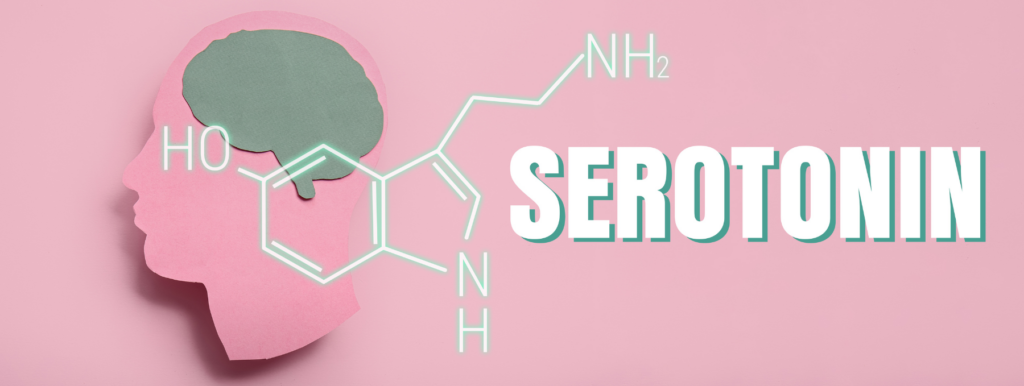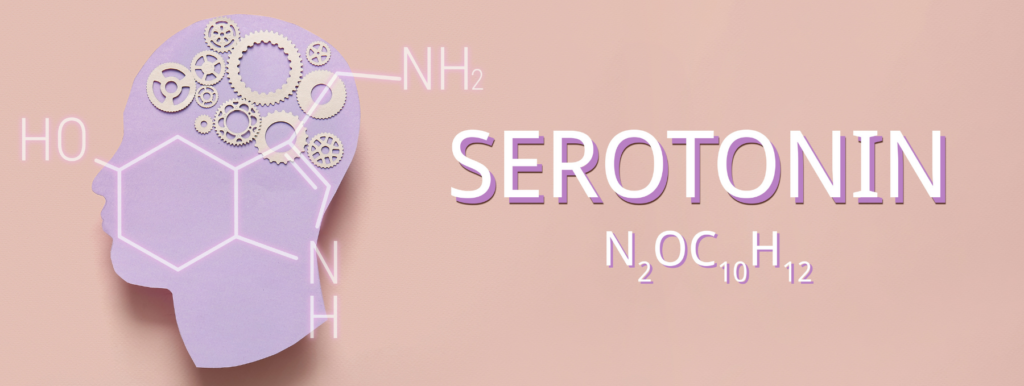

Serotonin is often called the “feel-good” chemical, but in your body it works less like a single mood switch and more like a signal that many cells can interpret in different ways. Serotonin doesn’t act alone—it works through serotonin receptors, specialized proteins found in cell membranes. When serotonin binds to a receptor, it can change how a cell behaves, affecting nerve signaling, muscle contraction, hormone release, digestion, blood vessel tone and even immune responses. Below is a guided tour of the major serotonin receptor families, with a focus on where they are found in the body and what each one does.
The Basics: How Serotonin Receptors Shape Serotonin’s Effects
There are many types of serotonin receptors, grouped into families from 5-HT1 to 5-HT7. Each family has specific effects depending on its location and the cellular pathways it connects. Most serotonin receptors are G-protein-coupled receptors (GPCRs), which use internal signaling to either  ramp up or reduce cell activity over a prolonged period of time. But 5-HT3 is different: It’s an ion channel, so it can create quicker changes in nerve signaling compared to GPCRs.
Because serotonin receptors are distributed across many organs, serotonin’s job varies widely throughout the body. For example, receptors involved in mood regulation are different from those that help coordinate gut movement or blood vessel constriction.
5-HT1 Receptors: The “Brakes” and Fine-Tuners
The 5-HT1 family includes several closely related receptors: 5-HT1A, 5-HT1B, 5-HT1D, 5-HT1E and 5-HT1F. Found mainly in the nervous system, these receptors often act like “brakes,” reducing excessive signaling and fine-tuning neural communication. This makes them important in relation to understanding mood, stress and migraine.
5-HT1A
5-HT1A is found in the brain, including regions involved in mood, anxiety and stress responses. However, it is also present in the gut and other tissues. It helps regulate anxiety-like behavior and stress responses, and it also influences how neurons release other neurotransmitters. In the gut specifically, 5-HT1A can contribute to regulation of motility and secretion.
5-HT1B and 5-HT1D
5-HT1B and 5-HT1D are commonly found in the brain, especially on nerve terminals, where they help control neurotransmitter release. Both are involved in sensory and pain pathways, often acting like a brake to reduce communication between neurons. They also play a role in migraine biology, and drugs that target similar pathways are used for acute migraine treatment.
5-HT1F
5-HT1F is found in more selective locations in the brain and nervous system. It is usually less focused on general mood and more involved in specific neural and vascular signaling pathways that are relevant to migraine.
5-HT2 Receptors: Shifting Cell Behavior and Smooth Muscle Tone
Compared with 5-HT1 receptors, 5-HT2 serotonin receptors more often affect cells in more activating or structurally different ways, influencing how strongly cells respond to signals. This action shapes movement, perception, appetite and other physiological functions, depending on the subtype and location.
5-HT2A
5-HT2A is found in the brain, particularly in regions involved in perception, cognition and sensory integration, and it is also present in the periphery. It contributes to cortical processing by helping brain regions coordinate information, and it is also involved in pathways that affect mood and thought. Some medications that influence mood and perception interact with 5-HT2A.
5-HT2C
5-HT2C is found in the brain, and includes circuitry related to appetite and mood regulation. It helps regulate feeding behavior and energy balance, and it also influences neurotransmitter systems that are tied to mood and anxiety.
5-HT2B
5-HT2B is found in the body’s periphery, including certain cardiovascular and tissue contexts. It plays a role in tissue growth signaling pathways, which is one reason that some drugs that strongly activate 5-HT2B have been limited due to safety concerns.
 5-HT3: Fast Signaling and Nausea
Unlike most serotonin receptors, 5-HT3 is an ion channel. When serotonin binds, it quickly opens/affects the channel, changing ion flow and creating a fast signal inside the body. Because 5-HT3 is strongly involved in nausea and vomiting, blocking it helps stop those symptoms—so anti-nausea medicines often target 5-HT3, including for chemo-related nausea.
5-HT3
5-HT3 is found in the brainstem and other parts of the nervous system that are involved in nausea and vomiting. It is also present in the peripheral nervous system, including in nerves in the gut. It mediates nausea and the vomiting reflex, and it participates in gut sensory signaling.
5-HT4: Gut Motility and the Coordination of Digestion
5-HT4 serotonin receptors are especially well known for their role in the gastrointestinal (GI) tract. If 5-HT3 is about fast “nausea circuitry,” 5-HT4 is more about keeping digestion moving.
5-HT4
5-HT4 is found in the enteric nervous system, the nervous system embedded in the gut. It is present on neurons and possibly other cells involved in gut motility. 5-HT4 helps stimulate gut movement and supports the coordination of digestive functions, including patterns of contraction and signaling.
5-HT5: Less is Known, But Still Part of the System
The 5-HT5 family is split into two types: 5-HT5A and 5-HT5B, with 5-HT5B being much less common in humans. Scientists know the 5-HT5 receptors exist, but they’ve been studied less than many other serotonin receptors, so they’re less familiar and less often targeted by mainstream treatments.
5-HT5A (and Related)
5-HT5A and related receptors were historically described as having more limited distributions in the brain. Their roles aren’t as well established in everyday physiology as other serotonin receptors, but they are still part of the serotonin signaling landscape and may influence neural processes.
5-HT6: Cognitive and Mood-Related Signaling
5-HT6 serotonin receptors are mainly involved in cognitive and mood-related signaling, meaning that they are linked to how the brain handles complex mental processes like learning, memory and information processing. Because they’re found in brain circuits involved in higher functions, they’re often discussed in the context of how serotonin may shape cognition and mood.
5-HT6
5-HT6 is found primarily in the brain, especially in regions involved in cognition. It tends to influence learning and memory pathways, helping to shape how information is processed and stored. It also has links to mood-related effects, although the detailed mechanisms behind those effects are still an active area of research.
5-HT7: Circadian Rhythm and Mood Connections
5-HT7 serotonin receptors have drawn attention for their roles in biological timing—including circadian rhythms—and in mood-related signaling. 5-HT7 is a key player in how serotonin participates in the timing of brain function and potentially mood stability.
5-HT7
5-HT7 is found in the brain, including in areas involved in sleep and wake regulation, and it is also present in other tissues in smaller amounts. It helps regulate your circadian rhythm (internal clock) and also influences mood and stress resilience by interacting with neural networks involved in emotional regulation.
Where Serotonin Receptors Show Up: A Whole-Body Network
If you zoom out and examine the big picture, serotonin receptors show a recurring pattern:
- Brain: Many receptor subtypes coordinate mood, cognition, sensory processing, sleep and stress response.
- Gut and enteric nerves: Receptors help determine motility, secretion and sensitivity—meaning serotonin can influence both how you digest food and how your gut communicates discomfort.
- Nervous system pathways for nausea and pain: Receptors like 5-HT3 and certain 5-HT1 subtypes play roles in reflexes and pain processing.
- Blood vessels and other tissues: Some receptors influence vascular tone and tissue signaling.
This is why serotonin is often described as both a neurotransmitter when acting in the brain and nervous system and a signaling molecule when acting throughout the body. Serotonin’s biological identity is defined by which receptor it activates on the relevant cells.
What Does This Mean for Mood and Health?
 A common misunderstanding is that serotonin equals happiness. In reality, serotonin works more like a set of instructions. Different serotonin receptors sit on different cells, and when serotonin binds to them, those receptors translate the signal into different outcomes. That’s why medicines that change serotonin signaling can have multiple effects: They may increase available serotonin, shift how signals travel in the body and target (directly or indirectly) specific receptor subtypes.
For example, treatments that boost serotonin signaling are often aimed at improving mood and anxiety. But because serotonin receptors are found throughout the body—including in the brain, gut and other systems—those medications can also affect digestion, sleep and other functions.
Serotonin receptor subtype also matters because two people can have similar overall serotonin levels but very different experiences because the activity levels of serotonin receptors, how sensitive the serotonin receptors are and where the serotonin receptors are located can vary. Also, drugs aren’t just “serotonin boosters.” Many work by acting directly on specific serotonin receptor types or by shifting the balance of signaling across receptor families. That’s why understanding the 5-HT1 through 5-HT7 receptor system helps explain the bigger picture: Serotonin isn’t a single neurotransmitter with one job, it’s a network with many “listeners,” and each listener can produce a different effect.
Serotonin Receptor Types: A Quick Recap
Serotonin receptors come in different forms that produce different effects. 5-HT1 receptors often act as “brakes,” important for mood and migraine pathways. 5-HT2 receptors have broader roles in shaping brain processing and appetite, with 5-HT2B prominent in some peripheral tissues. 5-HT3 is a fast ion-channel receptor involved in nausea and vomiting. 5-HT4 supports gut motility and digestion. 5-HT5 is less prominent and less studied. 5-HT6 relates to cognition and mood, while 5-HT7 helps regulate circadian rhythm and emotional pathways. Overall, serotonin receptors act like different doorways into the same system: Serotonin is the key, and the specific receptor it binds to determines the outcome that follows.