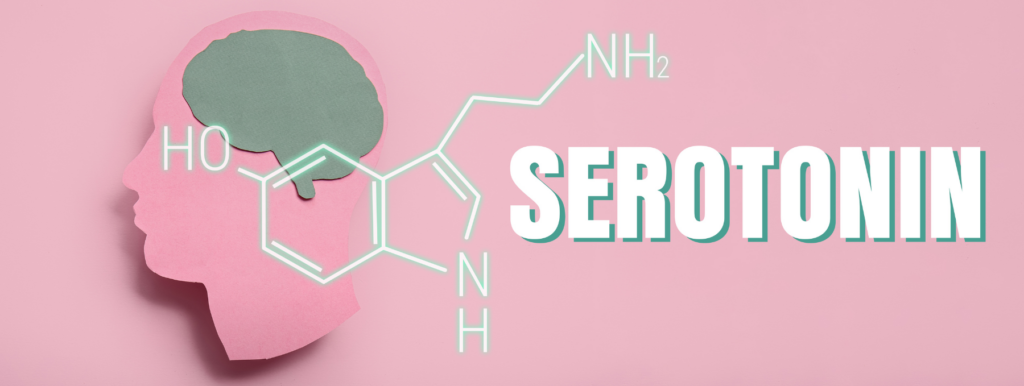

Alzheimer’s disease (AD) is a complex neurodegenerative disorder marked by progressive memory loss, cognitive decline and characteristic brain changes such as a build up of abnormal proteins called amyloid-beta (Aβ) plaques and tau tangles. Researchers are now looking beyond the usual chemicals involved in memory, such as acetylcholine and glutamate, to see if serotonin — a brain chemical linked to mood and many other functions — might affect the risk or course of Alzheimer’s. Here, we will delve into the biology behind that idea, what lab and human studies show, the limits of current evidence and the next steps for research and care.
Why Serotonin Could Matter in Alzheimer’s
 Serotonin is a chemical messenger best known for regulating mood, sleep and appetite, but it also influences how the brain adapts and repairs itself. Scientists have found several ways serotonin could help protect the brain from Alzheimer’s-related damage. For example, stimulating certain serotonin receptors can change how the brain processes a protein called APP so that it makes fewer of the harmful amyloid-beta fragments that form plaques in the brain. In animal studies, drugs that boost serotonin have also been linked to lower levels of soluble amyloid and fewer plaques, suggesting that these drugs might affect how amyloid is produced or cleared.
Serotonin also influences brain immune cells and can reduce harmful inflammation, which may slow nerve-cell loss. It supports growth and connections between neurons by affecting factors like BDNF (brain-derived neurotrophic factor) and promoting the formation of new neurons and synapses—processes important for memory and learning. What’s more, serotonin appears to help mitochondria and synapses work better, which matters because energy failure and loss of neuronal connections are early problems in Alzheimer’s. Altogether, these actions give a plausible reason to think serotonin could influence several important processes involved in Alzheimer’s.
Animal and Cellular Studies Support Protective Effects of Serotonin
Animal and laboratory studies provide the clearest evidence that boosting serotonin can protect the brain. Drugs that activate specific serotonin receptors — especially 5‑HT4 and in some cases 5‑HT1A/1B — steer the processing of the protein APP away from making harmful amyloid‑beta, and treated cell cultures and genetically modified mice often show lower Aβ levels and fewer plaques. Common antidepressants that raise serotonin (SSRIs like fluoxetine, citalopram and paroxetine) have similarly reduced brain Aβ and slowed plaque buildup in multiple mouse models when given over time, sometimes at doses similar to those used in people. These serotonin‑targeting treatments also tend to lower signs of brain inflammation and increase signs of stronger nerve‑cell connections and new neuron growth in the hippocampus.
Notably, the benefits in rodents are usually strongest when treatment starts before extensive plaque or tangle accumulation, hinting that any protective effect might be preventive or most useful early on. While these experiments show that changing serotonin signaling can alter core Alzheimer’s biology in controlled settings, translating those findings from mice and cell cultures into clear benefits for people is challenging.
Human Observational and Imaging Data
Human data as to the protective effects of serotonin is more mixed and far less definitive, but several observational and imaging studies suggest a potential link worth further evaluation:
- Observational studies: Retrospective analyses of past medical records have reported associations between SSRI use and reduced risk of progressing to Alzheimer’s or slower cognitive decline in some people, but findings
 are inconsistent and may be affected by other differences between groups (for example, why people were prescribed the drug, overall health or factors not recorded).
 - Amyloid PET and CSF studies: A few small long‑term studies using brain scans (amyloid PET) or spinal fluid tests (CSF) have suggested people on SSRIs might have less amyloid buildup or different amyloid levels, but these studies are small and their results haven’t been consistently repeated.
- Depression and serotonergic deficits: Depression raises the risk of dementia, and is also tied to problems with serotonin dysregulation. That makes it hard to tell whether serotonin‑boosting drugs lower Alzheimer’s risk by treating depression or by directly protecting the brain.
- Clinical trial evidence: There are few large, randomized trials testing SSRIs or other serotonin drugs to prevent or slow Alzheimer’s. Most trials have looked at treating symptoms like depression or agitation in people who already have Alzheimer’s, not at changing the disease itself, and they haven’t shown that these drugs slow disease progression.
Overall, human studies hint at the same possible benefits seen in lab and animal work, but they fall short of definitive proof. Most are observational, involve small sample sizes, involve different kinds of people and there aren’t enough targeted randomized trials.
Limitations, Complexities and Caveats
There are several important reasons to be cautious about the idea that serotonin can protect against Alzheimer’s. First, animal models only capture parts of the disease and don’t fully mirror the complex, late‑onset form of Alzheimer’s that develops in people over many years; mice used in experiments often carry genetic mutations that cause aggressive, early pathology unlike the sporadic human condition. Second, the serotonin system is diverse—dozens of receptor types exist with different, sometimes opposing, actions—so a drug that raises serotonin broadly (like an SSRI) will activate multiple receptors and downstream pathways, potentially producing mixed or unintended effects. Additionally, benefits seen in animals usually require early and sustained treatment before heavy plaque or tangle accumulation, so whether starting serotonergic treatment later in the disease course can meaningfully alter progression in humans remains uncertain.
What’s more, human observational studies are vulnerable to confounding and bias. People prescribed serotonergic drugs may differ from others in health status, healthcare access, lifestyle factors or because their depression is being treated — any of which could influence dementia risk independently of drug effects. Finally, long‑term manipulation of serotonin carries real side effects and safety concerns—from common issues like sexual dysfunction, weight change and gastrointestinal symptoms to rarer but serious problems such as serotonin syndrome or risky drug interactions. These must be carefully weighed against any hypothetical long‑term benefit and considered in the context of a person’s overall health and medications.
Implications for Research and Clinical Practice
With all of this information in mind, researchers should focus next on clinical trials that target specific serotonin receptors — for example, testing drugs that specifically activate 5‑HT4. It would also be helpful to conduct well‑designed randomized studies to see whether changing serotonin signaling actually changes Alzheimer’s biomarkers such as amyloid and tau on PET scans or in CSF, slows cognitive decline or reduces disease progression in people at risk. Human studies that show how activating particular  serotonin receptors causes downstream effects like changes in Aβ metabolism, inflammation or neurogenesis are also needed to prove causality rather than just show associations.
For clinicians and patients, the practical message is straightforward: Treating depression in older adults is important for quality of life and may have indirect cognitive benefits, but current evidence does not support prescribing SSRIs or other serotonergic drugs solely to prevent Alzheimer’s outside of clinical trials. Because serotonin acts through many different receptors and people vary biologically, future approaches will likely need to be more personalized. For example, using selective receptor agonists, targeting treatment earlier in the disease process or combining serotonergic strategies with other disease‑modifying therapies.
Bottom Line: Promising Biology, Not Yet Proven in People
Serotonin could affect Alzheimer’s disease in several plausible ways, and animal and lab studies consistently show that changing serotonin levels can lower Aβ, reduce inflammation and protect synapses. Human observational and imaging studies show some encouraging but mixed results. At present, there is not enough high‑quality randomized clinical trial evidence to conclude that boosting serotonin prevents or slows Alzheimer’s disease in people. The most promising path forward is receptor‑specific clinical research and larger trials focusing on early or at‑risk populations to determine whether serotonergic interventions can change the course of the disease, not just relieve symptoms.