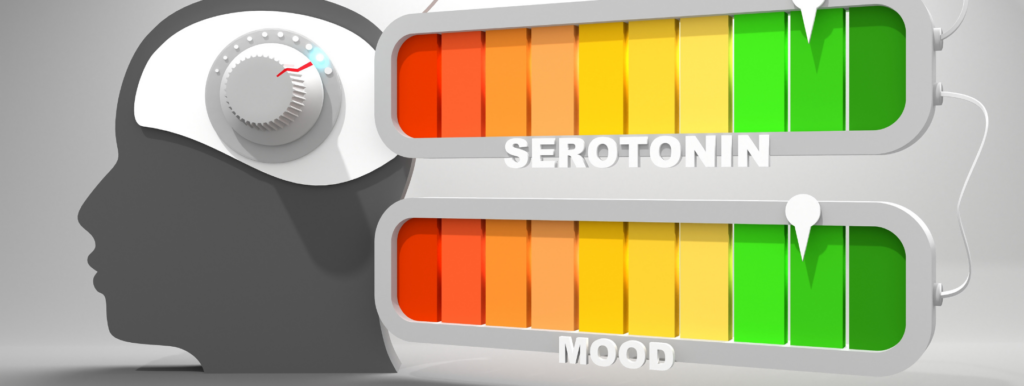

Tinnitus is a condition that is hard to fully understand unless you’ve lived with it. To most people it’s just “ringing in the ears,” but for those who have it, it becomes a daily reality of buzzing, hissing or ringing that no one else hears. Tinnitus can disrupt sleep, focus and mood, even when the ears seem perfectly healthy. Tinnitus researchers have struggled with a couple of key questions: why the experience of tinnitus varies so much from person to person, and why some treatments help while others don’t. A recent study points to a new clue: serotonin. The study revealed that this mood-related neurotransmitter—also the target of many antidepressants—may influence tinnitus through specific brain circuits tied to auditory processing. While the findings are early, they offer a plausible, biology-based reason tinnitus might change with serotonin-related medications and suggest a route toward more targeted therapies.
Tinnitus Isn’t Just an Ear Problem—It’s a Brain Network Issue
 Scientists have long suspected that tinnitus isn’t simply an ear problem. It’s also thought to be a brain problem involving how the nervous system interprets, amplifies or recalibrates sound signals after damage or altered input. Tinnitus is typically described as a sound without a sound. That’s not just a poetic way of putting it. In many cases, it’s thought to arise when the brain’s auditory system changes its internal settings after hearing loss, damage or altered sensory input. Instead of receiving a stable stream of information from the ears, the auditory system may compensate—sometimes in a way that becomes maladaptive.
Imagine the brain as a system that expects certain patterns of incoming signals. If the input changes, the brain recalibrates to make sense of the mismatch. In some people, that recalibration doesn’t settle back into normal balance. The result can be neural activity that the brain interprets as sound—tinnitus—even in quiet environments. This helps explain why tinnitus can be influenced by things that change brain state such as stress, sleep, attention/focus and certain medications. It’s not that these factors create tinnitus from scratch every time. It’s that they can shift the brain networks that generate the tinnitus experience.
Serotonin: More Than Mood Chemistry
Serotonin is a chemical messenger present throughout the brain as well as peripherally within the body. It influences mood, anxiety, appetite, sleep, pain perception and many other functions. Because many antidepressants work by increasing serotonin signaling, serotonin has become tightly linked in public understanding to depression and anxiety. However, serotonin is also a neuromodulator—it doesn’t just affect thoughts and emotions, but it can change how brain circuits behave, altering the way neurons communicate. That means serotonin could plausibly influence sensory processing too, including the auditory pathways implicated in tinnitus.
The recent research is intriguing because it connects serotonin activity to tinnitus-like symptoms. In the study, which used a mouse model, increasing serotonin signaling was associated with behavioral signs that resemble tinnitus. More importantly, researchers identified a serotonin-related brain circuit that connects with auditory processing. When this circuit was turned off, the tinnitus-like symptoms were reduced. In other words, the study doesn’t rely only on correlation, but it suggests a causal pathway: Serotonin can affect the neural machinery that contributes to tinnitus-like behavior, and interfering with the relevant circuit can change the outcome.
Why Brain Circuits Matter (and Why Tinnitus Isn’t One-Size-Fits-All)
People often hear the question “could serotonin worsen tinnitus” and assume the conclusion will be simple: higher serotonin levels mean worsening tinnitus; lower serotonin levels mean an improvement in tinnitus. Real biology rarely works that neatly. Serotonin signals are complex. They depend on where in the brain serotonin is released, which receptors are involved and which downstream circuits are engaged. Even if two people both experience tinnitus, the underlying mechanisms might differ. For example, there may be different patterns of hearing loss, different stages of brain adaptation, different brain network connectivity and different baseline susceptibility.
 The circuit-level involvement discovered in the recent study matters because it reframes how the relationship between serotonin and tinnitus is viewed. It implies that serotonin’s impact on tinnitus may depend on specific neural routes rather than on serotonin that is present everywhere in the brain doing the same thing. This opens the door to a more personalized future: Instead of asking, “Do serotonin-elevating drugs worsen tinnitus?” we may eventually be able to ask, “Which serotonin circuits drive tinnitus for this person?” In short, tinnitus could be thought of as one symptom with potentially different causes.
A Bridge Between Lab Research and Patient Experiences
One reason serotonin is getting attention in relation to tinnitus is that many patients already report a pattern: Tinnitus seems to change after starting or adjusting antidepressants that boost serotonin signaling, especially SSRIs. These observations are hard to study because tinnitus is a subjective condition and other factors like sleep, stress, mood and life circumstances often shift at the same time.
The recent study doesn’t prove that every antidepressant-linked change to tinnitus is caused by serotonin, but it offers a plausible mechanism. If serotonin can influence auditory circuits in a way that produces tinnitus-like effects, then the timing of symptom changes around certain medications becomes easier to understand. Patient observations aren’t dismissed as random, but become testable ideas grounded in neurobiology. Clinically, it suggests monitoring tinnitus alongside medication adjustments can be worthwhile. It also hints that effects may be subtle and time-dependent—changes in loudness, distress or how noticeable the sound feels depending on attention level and brain state.
Serotonin and Tinnitus: A Delicate Balance
Serotonin isn’t a villain chemical. It supports essential functions, including mood and well-being. However, it may be that the same systems that can help depression and anxiety can also shape brain networks involved in tinnitus. This balance between the beneficial and less beneficial effects of serotonin is part of a broader challenge in neuropsychiatry: recognizing that the brain is one interconnected system and that drugs that target one network can influence others. For tinnitus, the goal shouldn’t be simply to eliminate serotonin. The goal would be to shape the specific circuit-level influences that worsen tinnitus while preserving the mental health benefits that serotonin-related treatments can provide.
In the long run, this suggests a path toward more precise interventions. Instead of broadly altering serotonin levels universally, future treatments might focus on particular serotonin neuron types, particular receptors or specific projections that link serotonin activity to auditory circuits. That kind of targeting is exactly the direction in which modern neuroscience drug development should move.
What’s Next: From Lab Mechanisms to Targeted Therapies
It’s tempting to hope for an immediate solution—take the right pill and tinnitus goes away—but tinnitus research usually doesn’t move that fast. Typically, progress happens in stages: Scientists identify a mechanism, test whether it matters in humans (not just in animals) and then refine treatments so they work without unacceptable side effects.
Based on the recent study, the next steps would likely include confirming whether the same serotonin-related mechanisms operate in people, determining which tinnitus subtypes are most influenced by serotonin signaling and figuring out whether existing antidepressant classes affect the relevant brain circuitry in ways that could match symptom changes.
Researchers would also look for more targeted approaches that can adjust the specific circuit involved without disrupting serotonin’s beneficial effects elsewhere. The promise of this “circuit-to-treatment” approach is that once a pathway is clearly linked to tinnitus-like behavior, scientists can try to mimic the effect safely in humans or build new therapies around that precise target.
Why This Research Matters Even if You Don’t Take Antidepressants
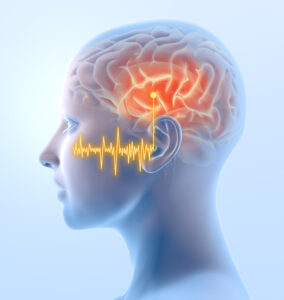 Even if you’re not personally on serotonin-affecting medication, this work is still relevant. Tinnitus is often entangled with the brain’s broader state: stress, attention levels, arousal and sleep quality. Since serotonin influences many of these processes, it’s reasonable to consider that serotonin pathways could influence tinnitus in multiple overlapping ways.
Some researchers may focus on direct auditory processing effects, while others focus on the emotional and attention networks that determine how threatening or noticeable tinnitus becomes. Serotonin can influence both categories, so could contribute to tinnitus in a layered fashion—affecting the auditory system and the brain systems that react to the sound. This helps explain why tinnitus can be stable for weeks and then suddenly become more bothersome. Brain states change continuously. If serotonin-related pathways influence those states and the relevant auditory circuits, tinnitus severity may shift accordingly.
Serotonin and Tinnitus: A Clearer Path Toward Targeted Future Treatments
The recent study about serotonin and tinnitus reframes the condition as more than an ear mystery. Instead, it points to a specific pathway: that serotonin can influence tinnitus-like symptoms through an auditory-connected brain circuit and disrupting that circuit reduces the effect of tinnitus in mice. For the general public, the takeaway isn’t that serotonin causes tinnitus for everyone or that antidepressants are the enemy. It’s more hopeful and more specific: Tinnitus may involve identifiable neurochemical and circuit-level mechanisms, and future treatments could be designed to help without unwanted effects on the auditory brain network.