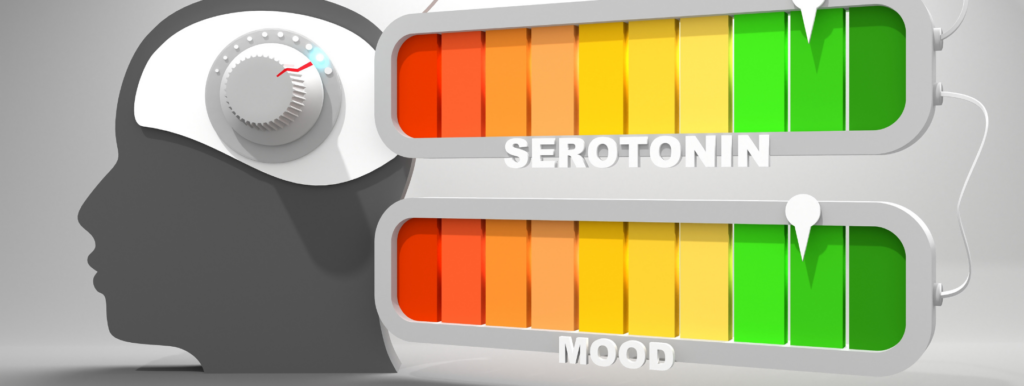

Serotonin is often discussed in connection with mood, happiness, and feelings of wellbeing. But it isn’t a magic chemical that is present only when you’re feeling happy. It’s an essential substance your body produces continuously, helping coordinate many systems—from the brain and gut to sleep regulation and blood vessel function. Understanding how serotonin is produced—where it comes from, how it’s made and what influences its production—can make this important neurotransmitter seem much less mysterious.
Tryptophan: The Serotonin Building Block
 To understand how serotonin is produced, we must start with a basic ingredient your body can’t make from scratch: the amino acid tryptophan. Amino acids are the raw materials used to build proteins. But tryptophan also has a special second life. A portion of it is diverted from protein-making pathways into a chemical pathway that eventually produces serotonin. Think of tryptophan as the starting material or main ingredient needed for serotonin. Without tryptophan, there’s less substrate available for the serotonin pathway. However, serotonin production isn’t determined by tryptophan alone—your cells also need specific enzymes and the right cellular conditions.
Tryptophan is obtained from the diet (for example, foods such as turkey, eggs, dairy, soy, nuts, seeds and many protein-containing foods). Once tryptophan is absorbed, it circulates throughout the body, and different tissues use it for different purposes. The body’s serotonin pathway is one major way tryptophan is utilized.
Step One: Tryptophan Becomes 5-HTP
The conversion from tryptophan to serotonin doesn’t happen in one leap. It occurs through a sequence of intermediate processes. The first major step is the conversion of tryptophan to 5-HTP (5-hydroxytryptophan). This reaction is carried out by an enzyme called tryptophan hydroxylase (TPH). You can think of this enzyme as a skilled worker that transforms tryptophan into the next compound on the path toward serotonin.
This particular step is often described as rate-limiting, meaning it tends to be a bottleneck. In plain terms, when this step is relatively slow, the whole serotonin production process slows down. When it is relatively efficient, more downstream serotonin can be made. Why is this step important? Because it helps explain why serotonin production can be sensitive to the body’s internal state. The TPH enzyme’s activity depends on the cell’s environment and availability of required molecular cofactors including oxygen, iron and tetrahydrobiopterin (BH4).
Step Two: 5-HTP Becomes Serotonin
After 5-HTP is formed, the pathway moves forward to the final product: the conversion of 5-HTP to serotonin. The enzyme commonly responsible for this conversion is aromatic L-amino acid decarboxylase, often abbreviated as AADC. “Decarboxylase” is a clue to what this enzyme does: It removes a carbon-containing group (as carbon dioxide, CO₂) from the intermediate to create serotonin.
Once serotonin is made, it is used in different ways depending on where it’s produced. In the brain, serotonin is a neurotransmitter—meaning it helps neurons communicate. In the gut and other tissues, serotonin functions more like a signaling molecule, influencing processes such as gut motility and sensory signaling.
Where Serotonin is Made: Brain, Gut and Beyond
Serotonin is most often associated with the brain. This makes sense because serotonin is strongly associated with mood and mental health, and it is a well-known neurotransmitter in the brain. But a less-known fact is that serotonin is also produced in the body.
Brain Serotonin
In the brain, serotonin is produced in specific neuron groups located in regions such as the raphe nuclei. Those neurons release serotonin to other parts of the brain, where it can affect mood regulation, sleep-wake cycles, appetite and more. The brain has very specialized functions, and because serotonin affects mood and behavior, the brain is the part of the serotonin story that gets the most attention. But the brain is only one piece of the puzzle.
Gut and Peripheral Serotonin
A large share of serotonin in the body is made outside the brain, particularly in the gastrointestinal tract. Specialized cells in the gut called enterochromaffin cells produce serotonin and help coordinate digestion. Serotonin can influence how strongly the gut contracts, how quickly contents move through the digestive system and how the gut communicates with the nervous system. This is one reason serotonin is often discussed both in mental health contexts and in digestive health conversations. It’s the same molecule, but the job it does can differ depending on the tissue where it’s produced and the receptors that respond to it.
Factors That Influence Serotonin Production
If serotonin production depends on a pathway that relies on enzymes and intermediate compounds, then it should be no surprise that several factors can shift how much serotonin is produced.
Enzyme Activity
The enzymes involved in the pathway—especially tryptophan hydroxylase—must be functional. Changes in enzyme activity can occur due to normal biological variation, disease states, inflammation and other physiological influences.
 Availability of Tryptophan
Because tryptophan is the starting material, its availability matters. If dietary intake is very low for a long time, the supply of tryptophan for serotonin synthesis could be reduced. That said, serotonin production is not simply “more tryptophan equals more serotonin,” because multiple steps in the pathway and transport processes can limit the outcome.
Cellular Environment and Biochemical Cofactors
The serotonin production process occurs inside cells under specific conditions. The cells must have the necessary chemical cofactors and reactants to run the enzymatic steps efficiently. Oxygen levels and other factors can matter because enzymes depend on the chemistry inside the cell.
Transport Into the Brain
Even if tryptophan exists in the blood, the brain is selective about how much enters. Transport across the blood-brain barrier is part of how the brain controls which nutrients reach the serotonin-producing neurons. This helps explain why dietary tryptophan can have more complicated effects than people assume.
After Production: Release, Recycling, and Conversion
Once made, serotonin is stored and used throughout the body.
In the Brain
Serotonin is packaged into vesicles in neurons and released into synapses, the spaces where neurons communicate. After performing its job on receiving neurons, serotonin is removed from the synaptic space through processes such as reuptake. The serotonin system can also involve the breakdown of serotonin into other metabolites.
A key takeaway is that serotonin’s effects are not only determined by how much serotonin is produced, but also by how long it persists in the signaling space and how strongly it activates its receptors.
In the Pineal Gland: The Melatonin Connection
Serotonin also serves as a precursor for melatonin, a hormone closely tied to sleep timing. In the pineal gland, serotonin can be converted into melatonin, especially under conditions that signal nighttime. This is one reason serotonin is sometimes discussed as part of the sleep-wake story–not because it directly causes sleep, but because it can feed into melatonin production.
Why Serotonin Gets So Much Attention in Mood
Because serotonin plays a role in brain signaling, changes in serotonin function are associated—directly or indirectly—with mood, anxiety and other mental health conditions. That doesn’t mean serotonin is the single cause of depression or anxiety, or that increasing serotonin automatically fixes mood. Human brains are complex networks, and behavior emerges from many systems interacting.
 Still, serotonin’s central role in regulating neural circuits helps explain why medications that affect serotonin signaling (such as SSRIs, selective serotonin reuptake inhibitors) are commonly used. These medications don’t usually create serotonin from scratch but instead alter how serotonin is handled after it’s released. The serotonin production story matters because it sets the stage: If serotonin signaling depends on available serotonin, then production and metabolism can be part of the larger picture of how the system functions.
How Serotonin is Produced: From Tryptophan to a Body-wide Messenger
Serotonin is produced through a clear biochemical pathway that starts with the amino acid tryptophan. Cells convert tryptophan to 5-HTP using the enzyme tryptophan hydroxylase and then convert 5-HTP to serotonin using AADC. Serotonin is produced in multiple body regions, including the brain (as a neurotransmitter) and the gut (as a signaling molecule). Serotonin production depends on enzyme function, tryptophan availability and the cellular environment, while serotonin’s effects depend not only on how much is produced, but also on how it’s released, recycled and regulated. Understanding how serotonin is produced makes it easier to see why it’s involved in so many bodily functions—and why adjusting serotonin signaling is rarely as simple as changing just one thing.