Many people instinctively associate sunlight with feeling better. A nice, bright morning can make us feel more awake, energized and positive, while weeks of gray weather or short winter days can leave some people feeling sluggish and low. There is a biological reason for this. Light is one of the most powerful signals that affects the human brain and body. It helps regulate our circadian rhythm—the internal timing system that coordinates sleep, wakefulness, hormones, alertness and other physiological processes. Light also interacts with neurotransmitter systems involved in mood, including serotonin.
But there is an important distinction: light does not simply work like a serotonin supplement. The relationship between light and serotonin is indirect, complex and closely connected to the circadian system. So how much light do you actually need? Is sunlight better than indoor lighting? Does morning light matter more than afternoon light? And can a bright-light lamp provide similar benefits? Read on to find out more about the complex relationship between light and serotonin.
 How Does Light Affect Serotonin?
When teasing out the relationship between light and serotonin, the process begins in the eyes. Specialized light-sensitive cells in the retina called intrinsically photosensitive retinal ganglion cells (ipRGCs) contain a photopigment called melanopsin. Rather than primarily helping us see images, these cells provide information about the brightness and timing of the environment to the brain’s circadian system. This information reaches the suprachiasmatic nucleus (SCN), a small structure in the hypothalamus that functions as the body’s master circadian clock. From there, light influences a network of biological processes involving sleep, alertness, hormones and neurotransmitters.
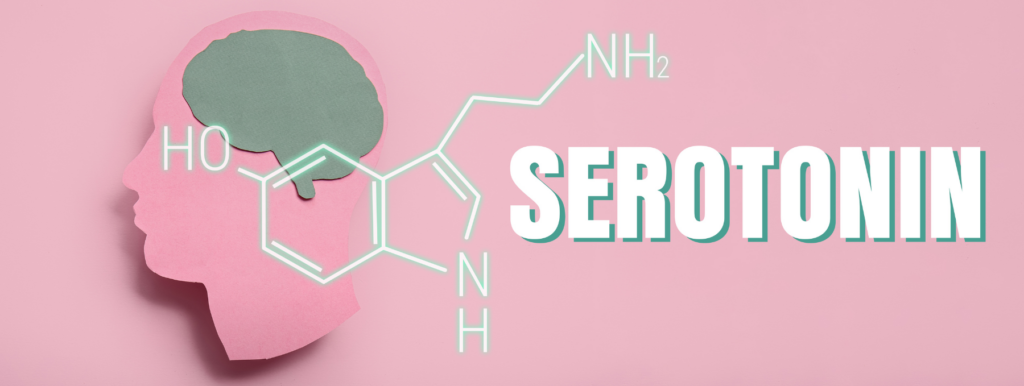
Serotonin is part of this network. Research has found evidence that bright-light exposure can affect serotonergic signaling, including serotonin reuptake mechanisms. Studies of bright-light therapy have therefore proposed changes in serotonin function as one possible mechanism behind its effects on mood. However, scientists don’t consider serotonin to be the entire explanation. Light’s effects on mood appear to involve several overlapping mechanisms, including circadian timing, melatonin regulation, sleep, alertness and neurotransmitter activity. In other words, if you feel better after getting outside on a bright morning, it may not be simply because your brain produced a large dose of serotonin.
How Much Sunlight Do You Need?
When it comes to sunlight exposure, there isn’t a scientifically established prescription such as “15 minutes of sunlight equals X amount of serotonin.” The biological response to light depends on its intensity, spectrum, duration, timing, your eyes’ exposure to it and your individual circadian system. Outdoor daylight is particularly powerful because it is usually dramatically brighter than typical indoor lighting. A normal indoor environment can provide only a few hundred lux, whereas outdoor daylight can reach thousands of lux or considerably more, depending on weather, season, location and time of day. For comparison, clinical bright-light therapy commonly uses a light box delivering 10,000 lux, typically for around 20–60 minutes. That’s why a dedicated light box can provide a much stronger and more controlled light stimulus than ordinary household lighting.
But that doesn’t mean you need to stand in direct sunlight for hours. For everyday circadian health, a practical strategy is to get outside during the morning or early part of the day and expose your eyes to natural outdoor light without staring directly at the sun. Even when the weather isn’t particularly sunny, outdoor light can be substantially brighter than indoor illumination. It is important to stress that there is no need to look directly at the sun, as doing so can damage your eyes.
Why Morning Light May Be Especially Important
When it comes to light and serotonin, timing matters almost as much as intensity. Morning light helps the circadian clock recognize the start of the biological day, supporting healthy sleep-wake timing, alertness and day-night rhythms. This is why appropriately timed bright light is used for seasonal depression and certain circadian rhythm disorders.
Daytime light is beneficial throughout the day, but getting plenty of natural light in the morning is a simple way to support a healthy sleep-wake rhythm. Going for a morning walk, having coffee outside, walking the dog or eating breakfast outdoors can provide meaningful daylight exposure without turning it into an elaborate wellness routine.
Is Outdoor Sunlight Better Than Indoor Light?
For most people, outdoor daylight is the easiest way to get a strong daytime light signal because it is typically much brighter than indoor lighting. Researchers studying light’s non-visual effects have found that the intensity and spectrum of light can influence circadian rhythms, alertness and mood, while natural changes in daylight throughout the day help the brain track time.
That doesn’t mean indoor light is irrelevant. Modern lighting can affect the circadian system, especially when designed to provide stronger daytime stimulation. However, ordinary indoor lighting generally does not provide the same intensity or natural variation as outdoor daylight.
What About Bright-Light Therapy?
 If you can’t reliably obtain sufficient daylight—or if you’re dealing with seasonal depression—bright-light therapy is a much more controlled approach. Clinical light therapy commonly involves sitting near a specially designed light box producing approximately 10,000 lux, often for 20–60 minutes in the morning. These devices are designed to provide bright visible light while filtering ultraviolet radiation. Bright-light therapy has substantial evidence behind it for seasonal affective disorder (SAD) and is recognized as a first-line treatment for the condition. Research also continues to investigate its use for other forms of depression and psychiatric conditions.
Importantly, light therapy shouldn’t be thought of as simply “boosting serotonin.” Its effects appear to involve the circadian system as well as mood-related neurobiology. And more light isn’t automatically better. A therapy light is intended to be used according to specific exposure instructions. People with certain eye conditions, recent eye surgery, bipolar disorder or medications that increase light sensitivity may need medical guidance before using it.
What About Blue Light?
Blue wavelengths deserve special attention because melanopsin-containing retinal cells in the eye are particularly sensitive to shorter wavelengths. That doesn’t mean blue light is inherently bad. During the daytime, blue-enriched light can be useful. It contributes to the signal that tells the circadian system that it is daytime and can promote alertness.
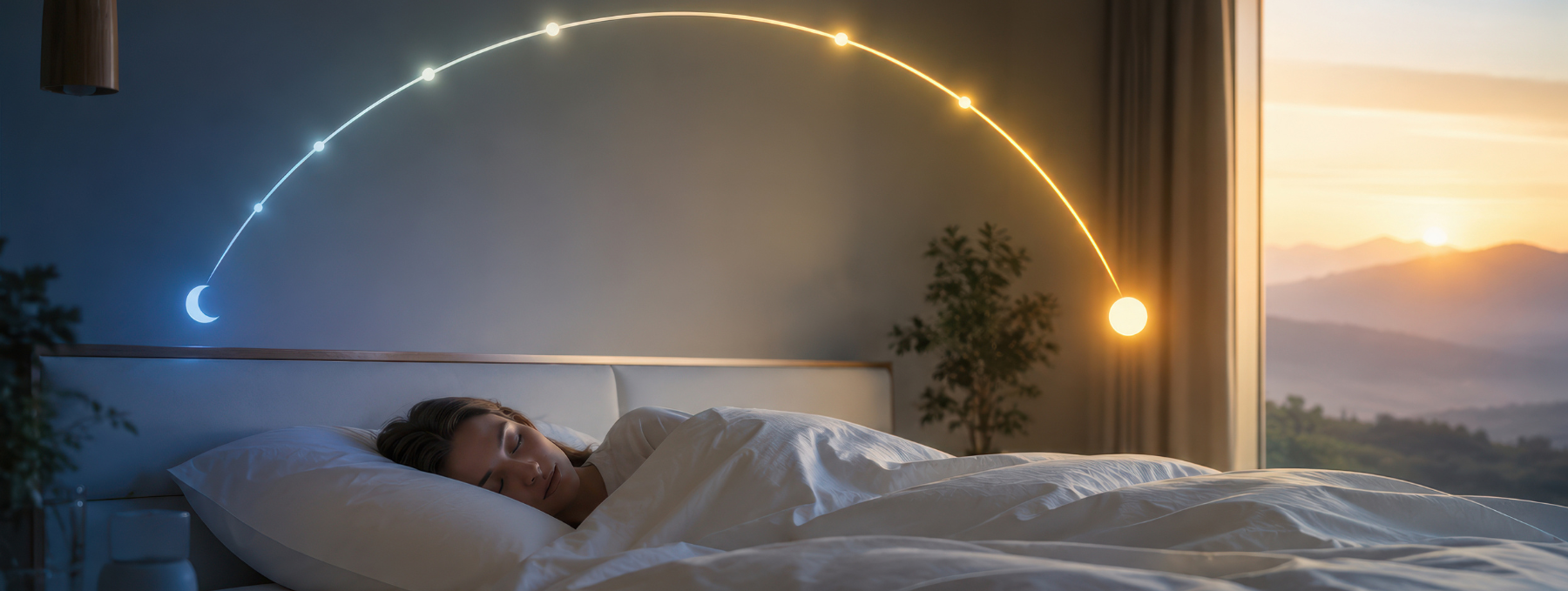
The problem is primarily timing: Strong light exposure late at night—particularly light containing substantial short-wavelength components—can interfere with the biological distinction between day and night. Evening and nighttime light can suppress melatonin and shift circadian timing. So the goal isn’t avoid blue light all day. A better principle is to strive for bright light during the day, getting progressively dimmer light as night approaches. This pattern more closely resembles the natural light-dark cycle.
Does Light at Night Lower Serotonin?
It’s tempting to assume that daylight increases serotonin, while nighttime light decreases serotonin—but the science doesn’t support such a straightforward conclusion. The better-established concern with excessive nighttime light is circadian disruption and melatonin suppression, rather than a simple depletion of serotonin.
In fact, research on artificial light at night is increasingly examining its relationship with sleep, circadian rhythms, mood and mental health. A 2024 systematic review and meta-analysis found an association between nighttime artificial-light exposure and depression risk, although observational associations cannot by themselves establish causation. Therefore, the practical lesson is less about trying to manipulate a single neurotransmitter and more about maintaining a healthy light-dark rhythm.
A Practical Light Routine
For someone interested in supporting mood, alertness, sleep and circadian health, a reasonable everyday approach is:
Morning: Get outside soon after waking when practical. Outdoor daylight is preferable to relying exclusively on indoor lighting.
Daytime: Spend additional time outdoors when possible. Keep indoor spaces reasonably bright during the day rather than living in dim lighting.
Late afternoon/evening: Allow lighting to become progressively less intense as bedtime approaches.
Night: Keep your sleeping environment as dark as practical and minimize unnecessary bright light.
If you’re experiencing persistent depression, significant seasonal mood changes or major sleep problems, don’t assume that more sunlight is the entire solution. Light therapy, psychotherapy, medication, sleep interventions and other treatments can all play a role depending on the underlying problem.
Light and Serotonin: The Bigger Biological Picture
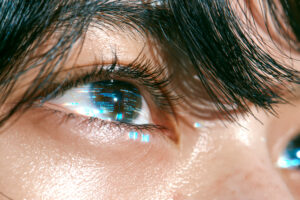 Light influences brain chemistry and mood, with serotonin being just one piece of the puzzle. Rather than thinking “sunlight equals serotonin,” it’s more accurate to see light as a signal that enters the eyes and helps regulate the circadian clock, affecting alertness, hormones, sleep, neurotransmitter activity and ultimately mood and well-being.
For everyday health, consistent daytime light—especially outdoor morning light—can help reinforce healthy day-night rhythms. You don’t need hours of sun exposure; bright daylight during the day and dimmer light at night can make a meaningful difference. When natural light isn’t enough, particularly for seasonal depression, properly designed bright-light therapy can provide a stronger, controlled stimulus.
Light does more than help us see. It helps the brain know when to be awake, when to sleep and how to organize the body throughout the day. Serotonin is part of this system, but it’s only one piece of a much larger biological picture.