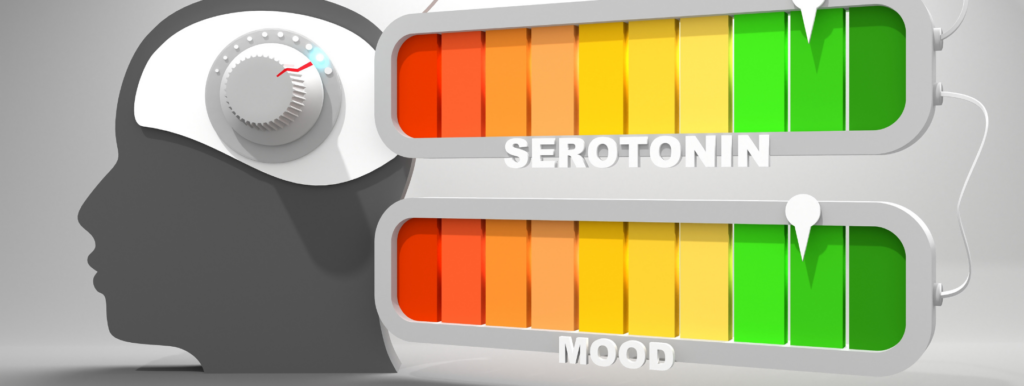
Serotonin is a chemical messenger that plays many roles in the human body. You’ve probably heard it referred to as the “happiness neurotransmitter,” but that’s an oversimplification. Serotonin affects mood, digestion, sleep, appetite and even how you perceive pain. Understanding how your body makes and metabolizes serotonin helps explain why diet, medicines and health conditions can change how you feel — both physically and mentally. Here, we will explain in plain English how serotonin is produced and metabolized within the body and why it matters.
What Is Serotonin and Where Is Serotonin Made?
 Serotonin (5‑HT) is a neurotransmitter — a chemical that nerve cells use to communicate with each other and with other tissues. Where is serotonin made? Surprisingly, about 90% of the body’s serotonin is made in the gut by specialized cells called enterochromaffin cells. In the gut, it helps regulate digestion, gut motility and signaling to the nervous system. A much smaller amount of serotonin is produced in the brain, where it plays important roles in mood regulation, sleep, appetite and certain cognitive functions.
Because serotonin cannot cross the blood–brain barrier, the brain maintains its own (central) pool of serotonin which is separate from the rest of the body (peripheral). What’s more, each pool regulates its own serotonin production independently. As a result, changes in peripheral serotonin levels do not directly alter brain serotonin levels and vice versa.
Serotonin Syntheses: How it All Begins
The body converts the dietary amino acid tryptophan into serotonin via a concise, stepwise biochemical pathway that links nutrient intake to neurotransmitter production. When tryptophan is absorbed from protein-rich foods, both its concentration in the blood and competition from other amino acids determine how much enters serotonin-producing cells. Once inside those cells, a tightly regulated sequence of enzyme-driven reactions ensures controlled serotonin synthesis. Multiple factors modulate this process, including which type of TPH enzyme is present (TPH1 in the periphery, TPH2 in the brain), cofactor availability and cellular transport mechanisms. Thus, dietary tryptophan is necessary but not solely determinative of how much serotonin is produced.
Step 1: Tryptophan, the Building Block
Serotonin is made from the essential amino acid tryptophan, which is obtained from protein-rich foods like meat, dairy, eggs, soy, nuts, seeds and some grains. The amount of tryptophan in the blood influences how much is available to cells that produce serotonin. However, diet is only one factor: Transport into cells and competition from other amino acids for uptake also affect how much tryptophan actually reaches serotonin‑making pathways.
Step 2: The First Chemical Change
Inside serotonin‑producing cells, the enzyme tryptophan hydroxylase (TPH) performs the first chemical change by adding a hydroxyl group to tryptophan, converting it into 5‑hydroxytryptophan (5‑HTP). Because this is the slowest step, the conversion of TPH is the key rate‑limiting step in serotonin synthesis, and serves as the main control point for how much serotonin a cell can make. There are two primary forms of the TPH enzyme: TPH1, which is found mainly in the gut and peripheral tissues, and TPH2, which is the predominant form in the brain.
Step 3: Removing a Small Piece to Make Serotonin
After the conversion of TPH to 5-HTP, a second enzyme, aromatic L‑amino acid decarboxylase (AAAD), quickly removes a small carboxyl group from 5‑HTP to produce serotonin (5‑HT). This decarboxylation step follows rapidly after the hydroxylation performed by tryptophan hydroxylase.
Storage and Release: How Serotonin Does Its Job
In the brain, serotonin is stored in tiny vesicles within nerve endings and released into the synapse between nerves when a neuron fires. Once in that space it binds to a variety of serotonin receptors on neighboring cells to modulate mood, sleep, appetite, pain perception and other neural functions. After its release, much of the serotonin is quickly taken back up into the releasing cell by the serotonin transporter (SERT) or metabolized, which helps keep signaling brief and precisely timed.
In the gut, specialized enterochromaffin cells detect food, mechanical stretch and chemical signals and release serotonin into the gut lining and nearby nerves — and in some cases into the bloodstream. Gut serotonin coordinates intestinal movement and secretion, influences blood flow and immune responses in the gut and sends signals to the nervous system that affect digestion, nausea and sensations such as bloating. Because the gut contains the vast majority of the body’s serotonin, changes in gut function or microbes can significantly alter peripheral serotonin activity and produce digestive or systemic effects.
Turning the Message Off — Reuptake and Breakdown
Once serotonin has transmitted its signal, the body clears it away quickly to stop ongoing stimulation. The primary cleanup tool is the serotonin transporter (SERT), a protein that pulls serotonin back into cells so it no longer activates receptors. Drugs called selective serotonin reuptake inhibitors (SSRIs) work by blocking SERT, leaving more serotonin active in the synapse. This is one reason they are used to treat depression and anxiety.
Inside the cell, serotonin is broken down primarily by an enzyme called monoamine oxidase A (MAO‑A). MAO-A converts it into another molecule that is further processed into 5‑hydroxyindoleacetic acid (5‑HIAA), which is then excreted in urine. Measuring 5-HIAA levels can give doctors an idea as to how much serotonin the body has been producing and breaking down.
Serotonin Production and Metabolism: The Practical Implications
The production and breakdown of serotonin have real-world effects on health and treatment because the system is compartmentalized, enzyme‑dependent and influenced by genetics, diet, medications and gut function. These practical factors matter for a number of reasons. First, it’s important to note that brain and gut serotonin are produced separately and do not mix, so altering serotonin in the periphery won’t necessarily change brain levels and vice versa. This explains why some treatments that affect gut serotonin don’t reliably affect mood, and vice-versa. Also, the enzymes that synthesize serotonin require specific cofactors — for example, tryptophan hydroxylase needs tetrahydrobiopterin (BH4) and AAAD needs vitamin B6 — so shortages of these cofactors or low tryptophan availability can limit production.
Additionally, many common medications target steps in the serotonin synthesis pathway. Selective serotonin reuptake inhibitors (SSRIs) block the serotonin transporter (SERT) in order to raise serotonin levels in synapses and are commonly used to treat depression, anxiety and some pain conditions. MAO inhibitors slow serotonin breakdown; combining multiple serotonergic agents can, in rare cases, cause dangerous interactions. Because roughly 90% of the body’s serotonin is in the gut, infections, inflammation, certain cancers or shifts in the gut microbiome can alter serotonin signaling and cause symptoms like nausea, diarrhea, constipation or bloating. Finally, genetic differences in enzymes and transporters (for example, variants in SERT or TPH) can influence how someone responds to stress, medication or risk for mood conditions.
Serotonin Production and Metabolism: Common Misconceptions
Serotonin is often oversimplified in popular discussion; it plays a role in mood but is one of many interacting chemicals and systems, and its production and effects differ across the body. Misunderstandings include the idea that serotonin alone equals happiness, that eating tryptophan-rich foods will instantly raise brain serotonin and mood and that all serotonin is made in the brain. Below we will examine why each of these misconceptions is incorrect:
- Serotonin = happiness: Serotonin contributes to mood regulation but is only one part of a complex mix that includes other neurotransmitters, hormones, life events and environment.
- Eat more tryptophan to feel happier instantly: While tryptophan is the raw material, eating tryptophan‑rich foods won’t instantly boost brain serotonin or make you feel happier, because amino acids compete for transport into the brain and serotonin synthesis is tightly regulated. And contrary to the belief that all serotonin is produced in the brain, most of the body’s serotonin is made in the gut, with brain and peripheral pools produced and controlled separately.
- All serotonin is produced in the brain: This isn’t true — roughly 90% of the body’s serotonin is made in the gut by enterochromaffin cells, not in the brain. Because serotonin cannot cross the blood–brain barrier, the brain and the rest of the body synthesize and regulate their own separate pools of serotonin. Thus, changes that alter peripheral serotonin (for example, gut inflammation or certain medications) won’t directly change brain serotonin levels, and vice versa.
How Researchers Measure Serotonin Activity
Researchers estimate serotonin activity using indirect measures because directly sampling serotonin—especially in the living brain—is difficult and invasive. Clinically, one common approach is measuring 5‑hydroxyindoleacetic acid (5‑HIAA). Because serotonin is broken down to 5‑HIAA, urine levels of  5‑HIAA are sometimes measured to estimate overall serotonin turnover. Higher or lower 5‑HIAA can reflect changes in overall serotonin turnover but must be interpreted in context because diet, medications and medical conditions can affect levels. Blood or platelet serotonin can be measured too, but these tests are influenced by many actors such as platelet count, recent meals and peripheral inflammation, so they are not routine diagnostics for mood disorders.
For brain serotonin, because brain serotonin activity is harder to measure directly in living people, researchers rely on indirect methods. Some common methods are functional and molecular brain imaging (for example PET scans using radioligands that bind to serotonin receptors or transporters) that can show aspects of serotonin signaling, and pharmacological challenge tests which observe behavioral or physiological responses to drugs that alter serotonin. Together, these approaches give a practical, if imperfect, picture of serotonin function in the body and brain.
Why Serotonin’s Balance and Context Matter
Serotonin is made from dietary tryptophan through two enzyme steps, stored and released by nerve cells and gut cells, cleared by a transporter and broken down by MAO‑A into a measurable waste product. Its effects depend on where it’s made (brain vs. gut), the availability of precursors and cofactors, genetic differences, medications and overall health. Serotonin is crucial for mood and many bodily functions, but it’s important to note that it is part of a complex system — not a single “on/off” switch for happiness.