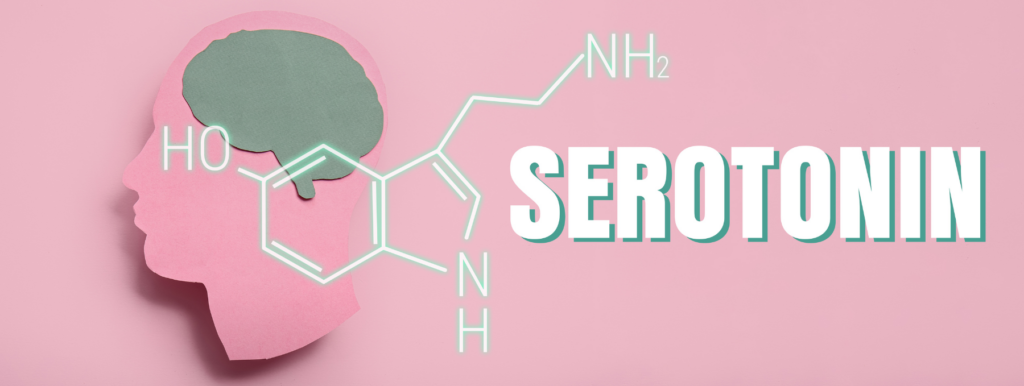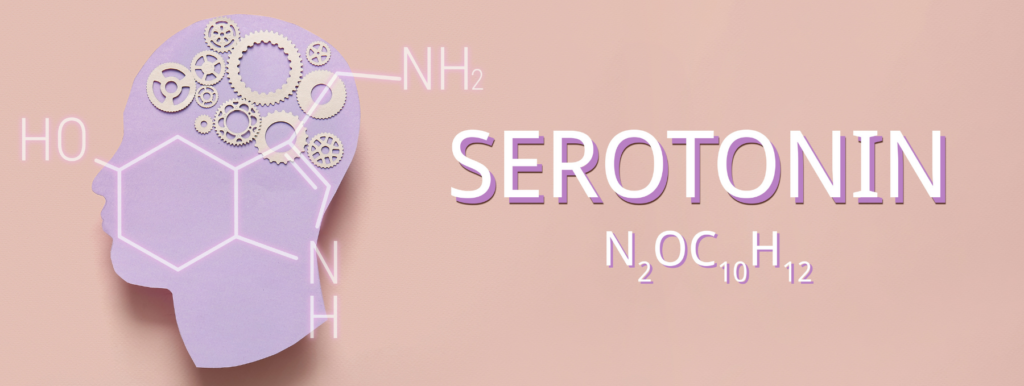

Serotonin is one of the best-known chemicals in the human body. Often called the “feel-good” neurotransmitter, serotonin is associated with mood—but its role extends far beyond emotional well-being. It helps regulate digestion, sleep, pain, blood vessel function and many other processes throughout the body. The serotonin system is also remarkably complex. How serotonin is made, broken down, transported and received by cells can influence everything from migraine and gastrointestinal function to the effects of antidepressants and psychedelics. Here are 11 surprising serotonin facts that reveal just how fascinating—and complicated—serotonin really is.
 1. Serotonin is made through a two-step biochemical process.
Your body doesn’t simply produce serotonin from scratch. It creates it through a carefully regulated biochemical pathway that begins with tryptophan, an essential amino acid obtained from food.
First, the enzyme tryptophan hydroxylase (TPH) converts tryptophan into 5-hydroxytryptophan (5-HTP). Then another enzyme, aromatic L-amino acid decarboxylase (AADC), converts 5-HTP into serotonin, also known as 5-hydroxytryptamine (5-HT).
In simplified form: Tryptophan → 5-HTP → Serotonin
The first step is particularly important because tryptophan hydroxylase helps regulate the rate of serotonin production. Different forms of this enzyme are also active in different parts of the body, including the brain and gastrointestinal tract. So when we talk about serotonin production, we’re really talking about a sophisticated enzymatic process that occurs throughout the body.
2. Serotonin is primarily broken down by MAO-A.
Once serotonin has carried out its signaling functions, the body needs to deactivate and remove it. One of the most important enzymes involved is monoamine oxidase A (MAO-A). MAO-A metabolizes serotonin through a series of chemical reactions, ultimately producing 5-hydroxyindoleacetic acid (5-HIAA), one of the major metabolites of serotonin. 5-HIAA can then be eliminated in urine.
This process is important because serotonin levels aren’t determined solely by how much serotonin the body produces. They also depend on how much is released, transported, taken back up into cells and metabolized. In other words, serotonin is continuously being regulated rather than simply accumulating in the body.
3. Blood and urine tests don’t tell you how much serotonin is in your brain.
It may seem logical that a blood test for serotonin would reveal how much serotonin is available in the brain. Unfortunately, it doesn’t work that way. The body has separate central (brain and central nervous system) and peripheral (body) serotonin systems. Serotonin produced outside the brain does not simply cross the blood-brain barrier and enter the brain.
Blood or urinary serotonin measurements can be useful for certain medical purposes, particularly when doctors are evaluating serotonin-producing tumors. Urinary 5-HIAA, for example, is an established test used in the evaluation of carcinoid syndrome. But these measurements should not be interpreted as a direct measurement of serotonin activity in the brain. This is an important distinction when discussing claims about having “low serotonin.”
4. Some common antidepressants work by changing serotonin signaling.
Selective serotonin reuptake inhibitors (SSRIs) are among the best-known medications that affect the serotonin system. Examples include fluoxetine, sertraline, escitalopram and citalopram. SSRIs block the serotonin transporter (SERT), which normally removes serotonin from the space between nerve cells. By inhibiting this reuptake process, SSRIs increase serotonin signaling in the synapse.
Another class of antidepressants, serotonin-norepinephrine reuptake inhibitors (SNRIs), affects both serotonin and norepinephrine transporters. However, this doesn’t mean depression is simply caused by “low serotonin.” Modern research recognizes depression and other psychiatric conditions as complex disorders involving multiple neurotransmitters, brain circuits, genetics, environmental factors and other biological processes.
5. Some medications increase serotonin by slowing its breakdown.
SSRIs aren’t the only medications that affect serotonin. Monoamine oxidase inhibitors (MAOIs) work differently by inhibiting enzymes responsible for breaking down monoamine neurotransmitters, including serotonin. By slowing serotonin metabolism, MAOIs can increase the availability of serotonin as well as other neurotransmitters such as norepinephrine and dopamine.
MAOIs can be effective medications, but they require careful management because they can interact with certain medications and, depending on the MAOI, dietary sources of tyramine. Excessive tyramine in the setting of MAO inhibition can cause a potentially dangerous rise in blood pressure. MAOIs can also interact with other serotonergic drugs, potentially causing serotonin syndrome, a potentially serious condition caused by excessive serotonergic activity.
 6. Serotonin is involved in both migraine biology and migraine treatment.
Serotonin has an intriguing relationship with migraine. A class of migraine medications called triptans targets specific serotonin receptors, particularly 5-HT1B and 5-HT1D receptors. Drugs such as sumatriptan and rizatriptan are used to treat acute migraine attacks. Triptans work in part by activating serotonin receptors involved in blood vessels and the trigeminal pain system. They can reduce signaling associated with migraine pain and inhibit the release of certain neuropeptides.
The older explanation for migraines focused primarily on constriction of cranial blood vessels, but scientists now understand migraine as a much more complicated neurological process involving nerves, blood vessels and inflammatory signaling. Once again, serotonin demonstrates that its effects depend heavily on which receptor is activated and where that receptor is located.
7. Classic psychedelics act on the serotonin system.
The serotonin system is also central to the effects of classic psychedelics such as psilocybin and LSD. These substances interact with several serotonin receptors, but activation of the 5-HT2A receptor is considered a major mechanism underlying their characteristic changes in perception, cognition and consciousness.
Importantly, psychedelics don’t simply increase serotonin. Their mechanism is different from that of SSRIs. Rather than primarily blocking serotonin reuptake, classic psychedelics directly interact with particular serotonin receptors. This is a striking example of why serotonin levels alone don’t tell the whole story. The receptor being activated can matter just as much as the amount of neurotransmitter present.
8. Certain tumors can produce serotonin.
Certain neuroendocrine tumors can produce and release large amounts of serotonin and other biologically active substances. When excessive serotonin enters the bloodstream, it can contribute to carcinoid syndrome, which may cause symptoms such as flushing, diarrhea and wheezing or bronchospasm. Chronic serotonin excess can also contribute to heart-valve damage known as carcinoid heart disease.
Doctors may measure urinary 5-HIAA, a major serotonin metabolite, when evaluating suspected carcinoid syndrome. This is a powerful reminder that serotonin isn’t exclusively a brain chemical. A large proportion of the body’s serotonin is found in peripheral tissues, particularly the gastrointestinal tract and platelets.
9. Serotonin plays a major role in the gut.
Serotonin is an important signaling molecule in the digestive system. Specialized intestinal cells called enterochromaffin cells release serotonin in response to stimuli inside the gut. Serotonin helps regulate intestinal movement, secretion and sensation. Because of these functions, researchers have investigated serotonin’s role in irritable bowel syndrome (IBS). Altered serotonergic signaling may contribute to differences in intestinal motility and visceral sensitivity in some people with IBS.
Studies have also identified differences in serotonin-related activity among IBS subtypes, including constipation-predominant and diarrhea-predominant IBS. This doesn’t mean IBS is simply a serotonin disorder. It is a complex condition involving interactions among the gut, nervous system, immune system, microbiome and other factors. But serotonin is an important part of the gut-brain connection.
10. Serotonin is associated with several psychiatric conditions—but it’s not the whole story.
Serotonin has been extensively studied in depression, anxiety disorders, obsessive-compulsive disorder (OCD), eating disorders and other psychiatric conditions. Research has identified differences involving serotonin receptors, transporters and neural circuits in various disorders. But these findings don’t support the simplistic idea that psychiatric illness is caused by having too little serotonin.
For example, serotonin reuptake inhibitors can be effective treatments for OCD, demonstrating that serotonergic signaling is involved. Yet the underlying biology of OCD is much more complicated than a simple serotonin deficiency. Today, scientists increasingly view psychiatric disorders as multifactorial conditions involving genetics, brain circuits, neurotransmitters, stress, environment and other biological processes.
11. Serotonin has seven major receptor families.
Perhaps the most surprising fact about serotonin is that there isn’t just one type of serotonin receptor. Scientists have identified seven major receptor families: 5-HT1 through 5-HT7, with multiple subtypes within several families. Most are G-protein-coupled receptors (GPCRs). The major exception is 5-HT3, which is an ion channel.
 Different receptors can produce very different effects. For example, 5-HT1A receptors are involved in mood and anxiety-related signaling. 5-HT1B and 5-HT1D receptors are important targets for migraine medications, while 5-HT2A receptors play a central role in the effects of classic psychedelics. Other serotonin receptors influence digestion, nausea, appetite, sleep, cardiovascular function and other processes.
This receptor diversity is one of the main reasons serotonin can’t accurately be described as simply a “feel-good chemical.” Its effects depend on which receptor it activates, where that receptor is located and what other signaling systems are active.
The Bigger Picture: Serotonin Is a System, Not Just a “Feel-Good” Chemical
These 11 facts reveal just how complex serotonin really is. Serotonin is produced through a carefully regulated biochemical pathway, broken down by specific enzymes, transported throughout the body and received by numerous receptor types. It operates in both the brain and peripheral tissues, influencing everything from mood and perception to digestion, pain and cardiovascular function. This is why the popular idea of simply having “high” or “low” serotonin doesn’t tell the whole story. A better way to understand serotonin is as part of a large, interconnected signaling network. And the more researchers learn about that network, the clearer it becomes that serotonin’s role in the human body is far more fascinating than its “feel-good chemical” reputation suggests.