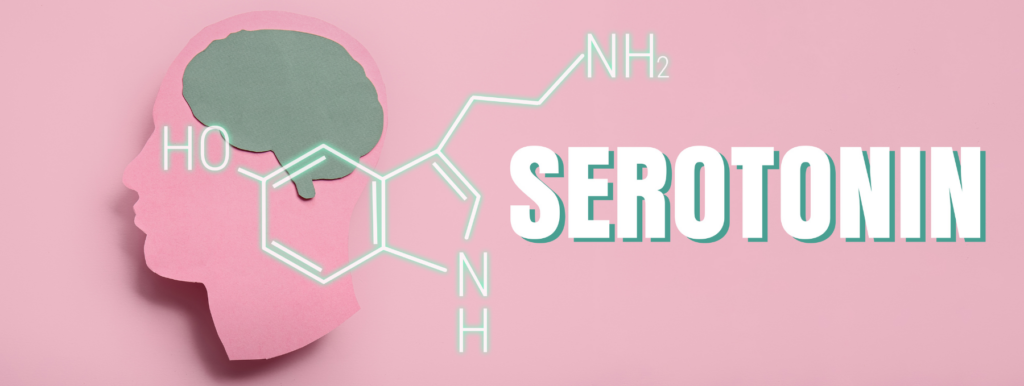

Schizophrenia is a complex mental health condition that affects how people think, perceive reality and interact with others. For decades, researchers have focused primarily on dopamine, a neurotransmitter involved in motivation, reward and movement, to better understand the condition. However, growing evidence suggests that serotonin may also play an important role. A study published in JAMA Psychiatry in December 2025 offers new insight into the relationship between schizophrenia and serotonin. Researchers discovered that people with schizophrenia showed greater serotonin release in a particular brain region than individuals without the condition. The findings challenge previous expectations and could help scientists better understand some of schizophrenia’s most difficult-to-treat symptoms.
Understanding Schizophrenia and Its Symptoms
 Schizophrenia is a psychiatric disorder characterized by disturbances in thinking, perception, emotions and behavior. Symptoms are generally divided into two categories: positive symptoms and negative symptoms. Positive symptoms involve experiences or behaviors that are not typically present, such as hallucinations, delusions and disorganized thinking. Negative symptoms involve reductions in normal functioning, including diminished motivation, reduced emotional expression, limited speech and social withdrawal.
Although antipsychotic medications can help manage positive symptoms, negative symptoms often remain difficult to treat. These persistent difficulties can significantly affect relationships, employment and everyday activities, making them an important focus of schizophrenia research.
The Role of Serotonin in the Brain
Serotonin is a neurotransmitter that helps nerve cells communicate and participates in regulating mood, sleep, appetite, cognition and other functions. Its effects depend on where it acts in the brain and which serotonin receptors are involved. While dopamine has traditionally received the most attention in schizophrenia research, scientists have also investigated serotonin’s involvement. Certain antipsychotic medications interact with both dopamine and serotonin receptors, suggesting that multiple neurotransmitter systems contribute to the condition. The relationship between schizophrenia and serotonin remains complex. Researchers have not established that schizophrenia results from having too much or too little serotonin, and the neurotransmitter’s effects may differ across brain regions and signaling pathways.
A New Study Examines Serotonin Release
Recently, researchers conducted a study involving 54 adults, including 26 individuals diagnosed with schizophrenia and 28 healthy participants. Their goal was to investigate whether serotonin release differed between the two groups and whether those differences were associated with schizophrenia symptoms.
 In the trial, participants underwent positron emission tomography (PET) brain scans before and after receiving a controlled dose of d-amphetamine, a substance capable of stimulating neurotransmitter release. This approach allowed researchers to estimate serotonin release responses in the frontal cortex, a brain region involved in planning, decision-making and other cognitive functions.
Importantly, most participants with schizophrenia were not taking antipsychotic medication. This helped researchers examine serotonin signaling while reducing the potential influence of medication on their findings.
Researchers Discover Greater Serotonin Release
The study produced an unexpected result. Researchers initially predicted that people with schizophrenia would demonstrate reduced serotonin release compared with healthy participants. Instead, the schizophrenia group showed an approximately 18% greater serotonin release response in the frontal cortex following the experimental challenge.
The researchers also found that greater serotonin release was associated with more severe negative symptoms and poorer social functioning. Participants with particularly persistent negative symptoms appeared to demonstrate more pronounced differences. These findings suggest that altered serotonin signaling may be connected to some of the functional difficulties experienced by people with schizophrenia. However, the results do not establish that increased serotonin release causes these symptoms.
What the Findings Mean for Schizophrenia Treatment
The discovery could have important implications for future schizophrenia research, particularly because negative symptoms remain challenging to manage with existing treatments. Most antipsychotic medications primarily target dopamine signaling, although some also affect serotonin receptors. Understanding how serotonin release differs among people with schizophrenia may eventually help researchers identify additional treatment targets.
Still, the study did not test any new treatments or demonstrate that reducing serotonin activity would improve symptoms. Future research will need to determine whether the observed differences represent a cause, consequence or accompanying feature of schizophrenia.
Important Limitations of the Research
Although the findings are intriguing, several limitations should be considered. The study included only 26 participants with schizophrenia, meaning larger investigations are needed to confirm the results.
 Researchers also measured serotonin release following administration of d-amphetamine rather than directly observing everyday serotonin activity. Consequently, greater serotonin release during an experimental challenge does not necessarily mean that people with schizophrenia have chronically elevated serotonin levels.
The study was also observational in its comparison of symptoms and serotonin responses. While it identified meaningful associations, it could not establish cause and effect or determine whether changing serotonin signaling would improve clinical outcomes.
A New Perspective on Schizophrenia and Serotonin
The study adds to growing evidence that schizophrenia involves complex interactions among multiple neurotransmitter systems rather than a single chemical imbalance. Its most surprising finding was that people with schizophrenia demonstrated greater serotonin release in response to an experimental challenge, contrary to the researchers’ original expectations.
The association between serotonin release, negative symptom severity and social functioning provides another avenue for investigating the biological mechanisms underlying schizophrenia. Additional studies may help determine whether these findings can contribute to more effective treatments.
Ultimately, research into schizophrenia and serotonin highlights how much scientists are still learning about brain chemistry and mental health. Understanding these relationships more precisely could eventually lead to better approaches for managing symptoms and improving quality of life.