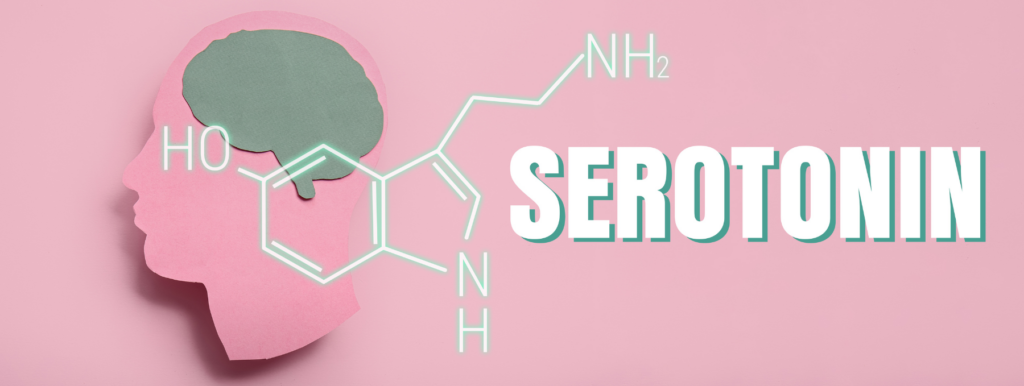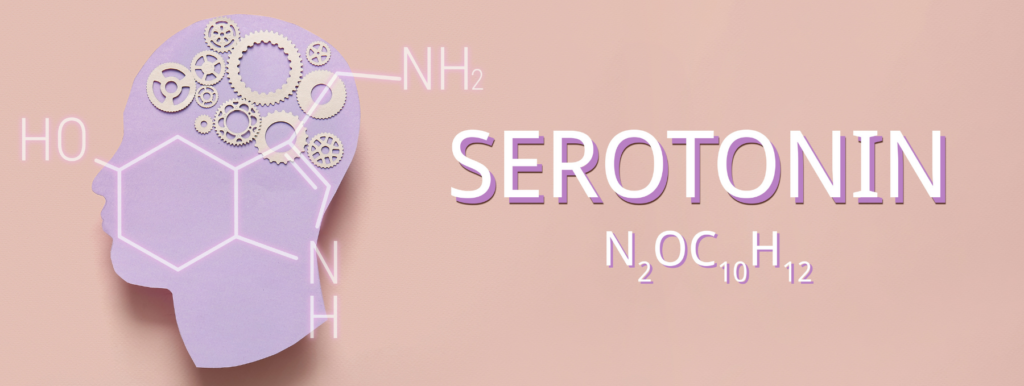

For decades, serotonin has been described as the brain’s “feel-good chemical,” with low levels often linked to depression and medications like SSRIs understood primarily as drugs that boost serotonin. While there is some truth to these ideas, they vastly oversimplify the biology. A new study investigating serotonin and mood, published in Nature Neuroscience, reveals a far more complex serotonin system. In the study, researchers discovered that serotonin-producing neurons don’t simply operate as a collection of independent cells broadcasting the same chemical message throughout the brain. Instead, groups of these neurons can interact with and suppress one another, creating a dynamic system in which different serotonin-producing “teams” can compete for control. The discovery could reshape how scientists understand serotonin’s role in mood, behavior, decision-making and psychiatric disorders—suggesting that serotonin may function less like a simple volume knob and more like a sophisticated decision-making network.
The Old Picture of Serotonin
 Serotonin, also known as 5-HT, is a neurotransmitter—a chemical messenger that allows neurons to communicate. Serotonin-producing neurons are concentrated primarily in structures in the brainstem called the raphe nuclei, but their projections extend throughout much of the brain. Because serotonin influences so many different functions, it has become associated with an enormous range of human experiences including mood, anxiety, appetite, sleep, motivation, learning, emotion and behavior. That breadth has also contributed to the popular idea that serotonin is essentially one system with one main job. But the brain rarely works that way.
Just as the immune system isn’t one single chemical signal, the serotonin system contains many different populations of neurons, connections and receptors. Different serotonin neurons can project to different areas of the brain and participate in different kinds of processing. The new research provides evidence that the serotonin-producing neurons themselves are also interacting in a more organized way than previously appreciated.
Serotonin Neurons Don’t Necessarily Act Alone
In the recent study, researchers focused on serotonin neurons in the brainstem and used several experimental approaches, including electrophysiology, cellular imaging, optogenetics, behavioral experiments, mathematical modeling and computer simulations. What they found challenged an important assumption. Scientists had generally understood individual serotonin neurons as operating relatively independently from one another. There had been evidence that serotonin neurons might be connected, but now, researchers were able to demonstrate direct interactions between them. And those interactions aren’t merely incidental.
The researchers found evidence that distinct groups—or ensembles—of serotonin neurons can have their own patterns of activity. These groups can influence serotonin release in particular areas of the brain. Even more intriguingly, the groups can compete. When one serotonin ensemble becomes highly active, it can strongly reduce serotonin release associated with another, less-active ensemble. The researchers describe this as resembling a “winner-takes-all” principle. Think of a room full of people trying to decide between two possibilities. At first, several opinions are being expressed. But as one group becomes increasingly dominant, it suppresses competing voices until one option effectively wins. Something conceptually similar may be happening within parts of the serotonin system. That is a very different picture from the idea of serotonin levels simply being “high” or “low.”
Serotonin May Be More About Action Than Emotion
This is where the findings become especially fascinating. If different groups of serotonin neurons can become active in different circumstances—and can suppress competing groups—the serotonin system may be involved in something much more sophisticated than simply regulating whether we feel happy or sad. Instead, it may help the brain evaluate competing possibilities and shape how we respond to them.
Consider a simple example. Imagine standing at the top of a high diving board and deciding whether to jump. Or walking toward a dark alley late at night and deciding whether to continue. Even an everyday decision—whether a situation feels safe enough to approach or whether it would be better to back away—requires the brain to integrate a complex mix of information, including past experiences, perceived danger, expectations, potential rewards and consequences and the circumstances of the moment.
The circuitry studied by the researchers may play a role in this kind of processing, helping competing signals within the brain influence which response ultimately becomes dominant. In that sense, serotonin may not simply be telling the brain how it feels. It may also be helping shape how the brain responds to what it encounters.
Why “Winning” Doesn’t Necessarily Equal a Happy Signal
 This distinction is important. When researchers describe one group of serotonin neurons as “winning,” it might be tempting to assume that the winning group represents a positive emotional state. But that isn’t what the research shows. “Winner-takes-all” refers to a computational process, not an emotional judgment. The brain may have multiple competing neural signals representing different aspects of a situation, and this circuitry may help one pattern of activity become dominant over another. Which pattern prevails depends on the information entering the circuit and the circumstances at the time.
This may help explain why serotonin can be involved in seemingly opposite behaviors. Serotonin isn’t inherently good or bad. Its effects depend on where, when, how much and through which neural circuit it is acting. That complexity is one of the most important lessons emerging from modern neuroscience: the effects of a neurotransmitter cannot always be understood simply by asking whether there is more or less of it.
Serotonin and Mood: Why This Matters for Depression
This discovery could eventually have implications for psychiatric medicine, particularly depression, but it is important not to overstate the findings. The researchers did not identify the cause of depression, discover a single “depression circuit,” or develop a new treatment. Instead, they uncovered a previously underappreciated mechanism through which groups of serotonin neurons interact and regulate one another.
That finding could eventually influence how psychiatric treatments are designed. SSRIs broadly increase serotonin signaling throughout the brain, where serotonin is involved in many different circuits. If scientists can determine which serotonin circuits contribute to specific symptoms or behaviors, future treatments might be able to target those pathways more precisely rather than simply increasing or decreasing serotonin throughout the brain. This is a promising direction, but science isn’t there yet.
Why These Findings Also Challenge the “Chemical Imbalance” Story
Perhaps one of the broader implications of this research is how it changes the way we think about the popular “chemical imbalance” explanation of depression. The idea that depression is simply caused by having too little serotonin has always been an oversimplification. Depression is a complex condition involving genetics, brain circuitry, stress biology, learning, environment, behavior and numerous interacting biological systems. Serotonin clearly matters. But how it matters is considerably more complicated than simply having too little of it, and this study reinforces that point.
The brain doesn’t operate like a bathtub in which serotonin is either too low or too high. Instead, serotonin neurons are embedded in constantly changing networks. They receive information, interact with one another, influence other regions and alter their effects depending on the circuit involved. The chemical is only one piece of the story, but the network is the bigger story.
A More Complex Serotonin System
Perhaps the easiest way to visualize this discovery is to imagine the brain as a large orchestra. We might once have thought of serotonin as the conductor simply turning the overall volume up or down. The new research suggests something far more complex. Different groups of serotonin neurons may function like different sections of the orchestra, each producing distinct patterns of activity. They communicate with one another, and one group can become dominant while suppressing another. The result depends not simply on how much serotonin is present, but on which neurons are active, when they are active and how they influence one another. This more nuanced view may help explain why altering serotonin can produce very different effects depending on the individual, the brain region involved and circumstances.
There is still much to learn. Some of the behavioral experiments were relatively artificial, and the researchers plan to investigate whether similar patterns occur during more natural behaviors in animal models. That distinction is important: discovering a mechanism in a mouse brain does not automatically tell us how that mechanism functions in humans or what role it might play in conditions such as depression. Future research will need to determine how these circuits behave in natural settings, how they interact with other brain systems and whether similar patterns exist in humans. Only then will scientists know whether this discovery could ultimately lead to a better understanding of psychiatric disorders or more targeted treatments.
Rethinking What We Know About Serotonin
The most exciting thing about this study isn’t that scientists have suddenly “solved” serotonin—they haven’t. Instead, they’ve uncovered another layer of complexity in a system we once thought we understood relatively well. Serotonin isn’t simply a happiness chemical circulating throughout the brain. It is part of an intricate network of neurons that can organize competing signals, regulate specific brain regions and help shape how the brain responds to the world around us.
 This changes the questions scientists need to ask. Rather than simply asking, “Do I have enough serotonin?”, researchers are increasingly interested in which serotonin neurons are active, where they send their signals, how they interact with other neurons and what happens when one circuit becomes dominant over another. Those questions could ultimately lead to a deeper understanding of depression, anxiety and other psychiatric disorders—and potentially to treatments that work not by broadly changing the brain’s serotonin level, but by precisely influencing the circuits in which serotonin is actually doing its work.
The serotonin story is far more complicated than the simple “more or less” model we’ve grown accustomed to. And while there is still much to discover, that complexity may ultimately bring scientists closer to understanding how the brain—and the disorders that affect it—really work.