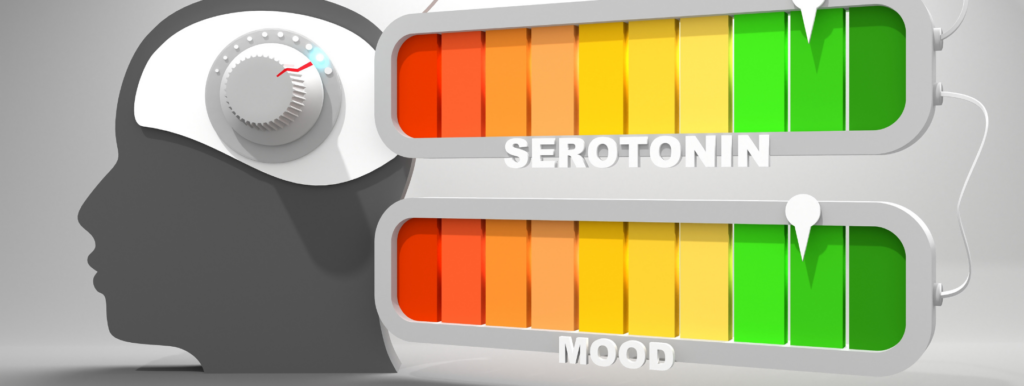

Serotonin is often described as the brain’s “feel-good” chemical, but that familiar label barely captures what serotonin actually does. Serotonin is a versatile chemical messenger involved in mood, sleep, appetite, digestion, nausea, pain, blood-vessel function and many other physiological processes. It helps cells communicate, but it does not deliver one universal message. Instead, the effect of serotonin depends on where it is released, which receptor receives it and what signaling machinery exists inside the receiving cell. Therefore, understanding serotonin requires looking beyond the idea of a simple chemical that makes us happy: Serotonin is better understood as a messenger whose meaning depends on the receiver.
What Is Serotonin?
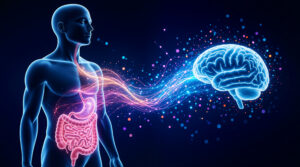 Serotonin is a neurotransmitter and signaling molecule chemically known as 5-hydroxytryptamine, or 5-HT. The body makes serotonin from the amino acid tryptophan through a series of biochemical reactions. Although serotonin is strongly associated with the brain, most of the body’s serotonin is actually produced outside the brain, particularly in the gastrointestinal tract. Specialized cells in the intestinal lining produce large amounts of serotonin, where it helps regulate intestinal movement and communication between the gut and nervous system.
The brain has its own serotonin-producing neurons. These neurons are concentrated primarily in groups of cells in the brainstem called the raphe nuclei. From there, serotonin-containing neurons send projections to many areas of the brain. It is crucial to note that serotonin produced in the body and serotonin produced in the brain are largely separate systems because serotonin itself does not readily cross the blood-brain barrier. In other words, serotonin circulating in your bloodstream does not simply enter the brain and alter your mood.
How Does Serotonin Communicate With Cells?
How does serotonin work? The basic process is surprisingly similar to other forms of cellular communication. Imagine that one cell needs to send a message to another. The sending cell releases serotonin into its surrounding environment. The serotonin then travels a very short distance—or, in some circumstances, circulates more broadly—and encounters another cell. That receiving cell may have specialized proteins called serotonin receptors.
A receptor is essentially a molecular sensor. When serotonin binds to the appropriate receptor, the receptor changes its activity. That change initiates a series of events inside the receiving cell. The important detail is that serotonin does not have just one receptor. Humans have multiple serotonin receptor families and subtypes, and they do not all produce the same response. This is why saying “serotonin does X” can be misleading. A better question is: What does serotonin do when it activates this particular receptor on this particular cell?
Serotonin Receptors Turn a Chemical Signal Into Cellular Action
Scientists generally classify serotonin receptors into seven major families, designated 5-HT1 through 5-HT7. Within those families are multiple receptor subtypes. These receptors can be divided broadly into two types of signaling mechanisms. Some serotonin receptors are ion channels. When serotonin binds to one of these receptors, the channel opens and allows electrically charged particles, or ions, to move across the cell membrane. This can change the electrical activity of the cell extremely quickly. The best-known example is the 5-HT3 receptor: Unlike most serotonin receptors, it is a ligand-gated ion channel. It plays an important role in rapid signaling associated with nausea, vomiting, and gastrointestinal activity.
Most other serotonin receptors belong to a group called G-protein-coupled receptors, or GPCRs. These receptors do not simply open a channel. Instead, serotonin binding changes the shape and activity of the receptor, which activates proteins on the inside of the cell. Those proteins then initiate what can be thought of as an intracellular relay system.
From Receptor to Cellular Response
Once a serotonin receptor is activated, the message has to be transmitted through the receiving cell. This can involve signaling molecules such as G proteins, cyclic AMP, calcium and protein kinases. These molecules pass the signal from one stage to another, sometimes amplifying it along the way. Eventually, the signaling cascade can influence what the cell does.
For a neuron, it might change how easily the neuron produces an electrical impulse or releases another neurotransmitter. For a smooth-muscle cell in the intestine, serotonin signaling can influence contraction and therefore help regulate the movement of food through the digestive tract. For a blood vessel, serotonin can contribute to changes in vascular tone. For other cells, serotonin signaling can influence secretion, metabolism, gene expression, growth or other cellular functions. This is one reason serotonin can have apparently contradictory effects in different parts of the body. The molecule is the same, but the receiver and its internal circuitry are different.
Serotonin in the Nervous System
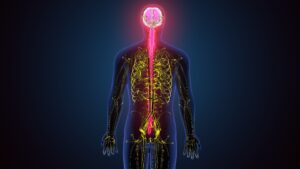 In the brain, serotonin is released by specialized neurons that communicate with other neurons and neural circuits. Rather than acting as a simple “happiness switch,” serotonin helps regulate the activity of networks involved in numerous functions. These include mood, anxiety, sleep and wakefulness, appetite, pain processing, learning, behavioral flexibility and impulse control. The effects can be rapid or slow. Serotonin can immediately alter the electrical activity of neurons, while longer-term signaling can change how neurons respond to other signals.
This helps explain why medications that influence serotonin can have effects that develop over time. For example, selective serotonin reuptake inhibitors (SSRIs) block the serotonin transporter, or SERT, which normally removes serotonin from the space between neurons. This initially changes serotonin signaling, but the therapeutic effects of antidepressants involve more complicated adaptations in neural circuits over time. The brain’s serotonin system is therefore less like a faucet that turns happiness on and off and more like a sophisticated regulatory network that adjusts the activity of many interconnected systems.
Serotonin in the Gut
The digestive system provides another striking example of serotonin’s versatility. Specialized intestinal cells called enterochromaffin cells can detect mechanical and chemical changes associated with food moving through the digestive tract. They release serotonin in response to various stimuli. This serotonin can communicate with nearby intestinal cells and with nerve endings belonging to the enteric nervous system, resulting in changes in intestinal muscle activity and secretion.
Serotonin is also an important component of the body’s signaling pathways involved in nausea and vomiting. This helps explain why drugs that affect serotonin receptors can influence gastrointestinal symptoms. Some medications specifically target receptors such as 5-HT3 to reduce nausea and vomiting. The gut is therefore not simply a passive organ affected by serotonin from the brain–it actually has a substantial serotonin system of its own.
How the Body Turns Off Serotonin Signaling
Cellular communication needs an “off switch,” otherwise, a signal could continue indefinitely. One major mechanism for terminating serotonin signaling involves the serotonin transporter, or SERT. SERT transports serotonin back into cells, where it can be reused or metabolized. Serotonin can also be broken down by enzymes, particularly monoamine oxidase (MAO).
Together, these processes regulate how much serotonin remains available to activate receptors and how long its effects last. This is an essential feature of biological communication. A good signaling system needs not only a way to send a message but also a way to stop sending it.
Why the Same Serotonin Can Produce Different Effects
The most important concept to take away is that serotonin’s effects are determined by context. Consider two cells exposed to the same serotonin molecule. Cell A may contain a receptor that reduces a particular signaling pathway. Cell B may contain a receptor that activates a different pathway. The two cells can therefore respond in completely different ways. Even two cells carrying the same receptor can respond differently if their internal signaling machinery differs.
This makes serotonin less like a command and more like a language. The chemical signal is the same, but the receiving cell determines how the message is interpreted. That principle also explains why manipulating serotonin can have effects throughout different physiological systems. A drug designed to influence serotonin signaling may interact with receptors or transporters that exist in multiple tissues, potentially producing both intended and unintended effects.
 Serotonin: A Signal With Many Messages
The popular view of serotonin as a “happiness chemical” is appealing because it is simple, but biology is rarely that simple. Serotonin is better understood as part of a vast communication network connecting cells, organs and neural circuits. Its effects emerge from interactions among serotonin-producing cells, receptors, transporters, enzymes, intracellular signaling pathways and the tissues in which all of these components are located.
In the brain, serotonin helps regulate complex neural networks. In the gut, it helps coordinate digestion and communication with the nervous system. Elsewhere in the body, serotonin participates in processes involving blood vessels, platelets and other tissues. The remarkable thing is that one relatively small molecule can participate in all of these functions without carrying a single universal message. Serotonin sends the signal. The receptor interprets it. The cell decides what to do with it. That simple sequence—release, reception, intracellular signaling and termination—is the foundation of serotonin’s remarkable ability to communicate throughout the body.