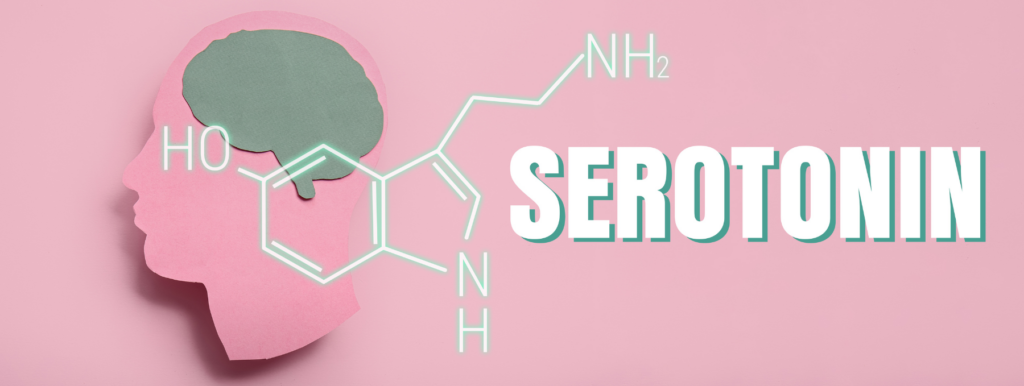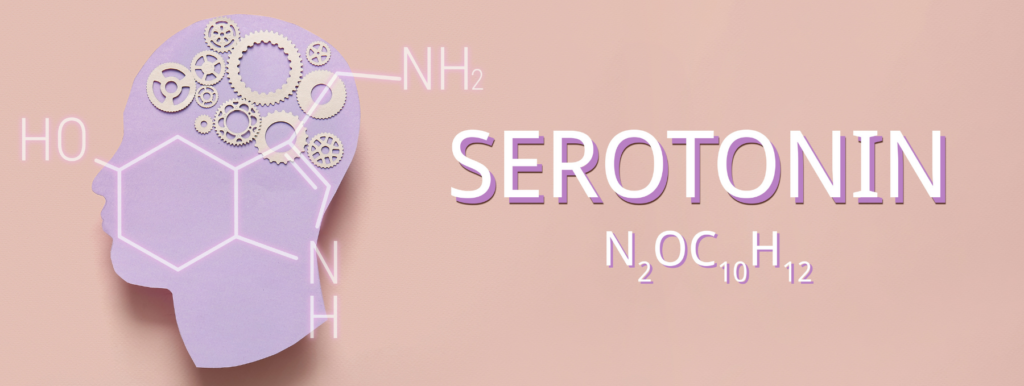
Serotonin is often referred to as the “happiness” neurotransmitter, but despite its association with mood and the brain, most of the body’s serotonin actually lives in the gut. That simple fact helps explain why mood, appetite, digestion, sleep and even immune responses are tightly linked. The gut–brain axis is a two-way communication system connecting the gut and brain, and serotonin is one of its central messengers. Here we will break down how serotonin works in the gut, how it helps the gut talk to the brain and why that matters for everyday health.
 What Is Serotonin, and Where Is It Made?
Serotonin (5‑HT) is a key neurotransmitter, a chemical the body uses to send signals between cells. Although we often think of serotonin as being present within the brain, about 90–95% of the body’s serotonin is actually produced in the gut by specialized cells called enterochromaffin (EC) cells. A much smaller portion is made in the brain by entirely different cells. These two pools are mostly separate because serotonin cannot freely cross the blood–brain barrier.
In the gut, serotonin has many local jobs. It helps regulate gut motility (how food moves through the intestines), controls fluid secretion and modulates local immune cells and blood flow. Gut serotonin also talks to nerves that carry information from the gut to the brain.
How the Gut Sends Serotonin Signals to the Brain
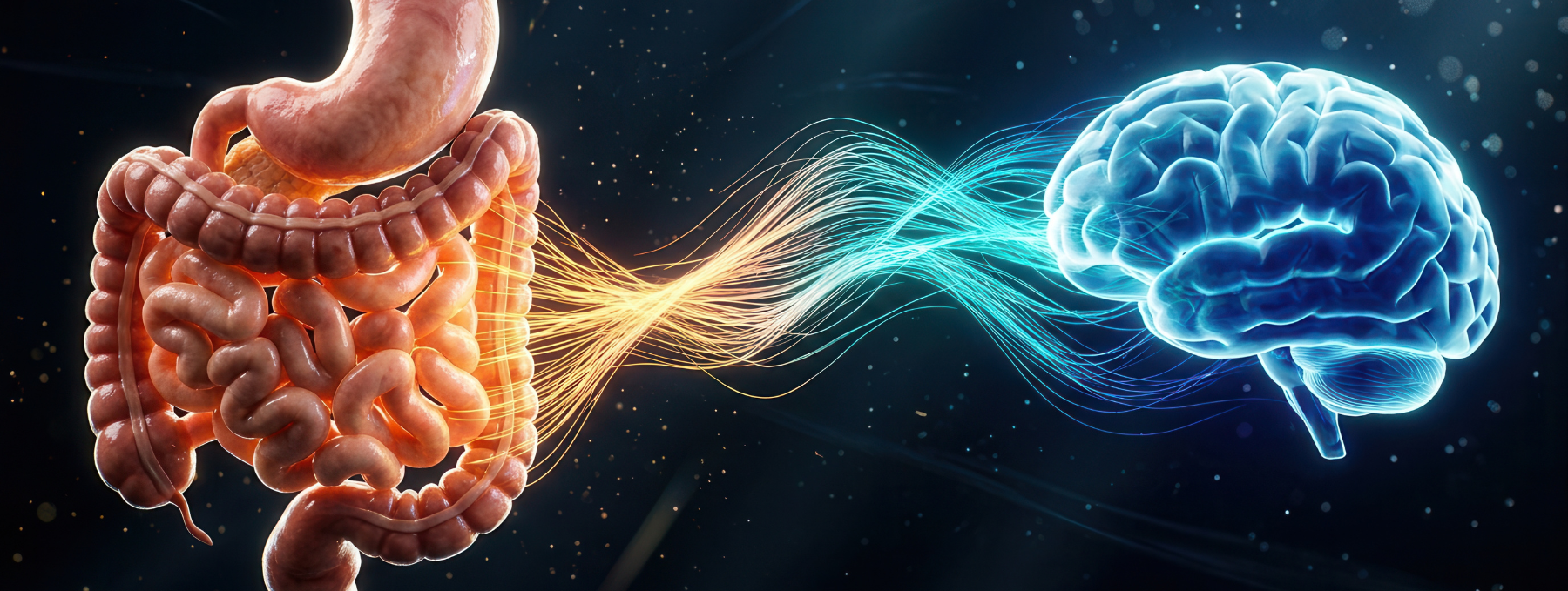
Gut serotonin influences the brain through several connected routes. Neural pathways — chiefly the vagus nerve and the enteric nervous system, a dense network of neurons lining the gut — detect signals from enterochromaffin (EC) and other gut cells. Serotonin released in the gut activates specific receptors (for example, 5‑HT3) on sensory nerve endings, and those nerves transmit rapid electrical signals to the brainstem and higher regions that regulate mood, appetite, nausea and stress.
Serotonin also shapes immune and endocrine signaling. It modulates immune cells in the gut and can influence the release of hormones and cytokines, which in turn affect brain function either directly or by altering neural signaling. Finally, metabolic and microbial metabolites produced by the gut microbiome influence how much serotonin the gut makes; those metabolites change serotonin production and thereby indirectly alter brain processes. Because these routes are diverse and interlinked, gut‑derived serotonin can affect the brain without crossing the blood–brain barrier.
The Microbiome–Serotonin Connection
One of the most exciting discoveries in recent years is that the gut microbiome — the trillions of bacteria and other microbes that live in our intestines — helps regulate gut serotonin. Microbes produce short‑chain fatty acids and other metabolites that increase expression of the enzyme TPH1 that makes serotonin in EC cells. Some bacteria can also influence how tryptophan, the amino‑acid precursor to serotonin, is used: They are able to steer it either toward serotonin production or down alternative metabolic pathways that generate different signaling molecules.
This relationship is bidirectional. Changes in serotonin signaling can alter gut motility, secretions and the immune environment, which in turn can change which microbes thrive. That creates a unique feedback loop: The microbiome influences serotonin, and serotonin shapes the microbiome and gut environment.
Why This Matters for Mood and Behavior
Although gut‑made serotonin does not readily enter the brain, it can still affect mood, stress and behavior through neural and immune pathways. Vagal signaling carries gut sensory information to brain regions that regulate mood and stress, and animal studies show that stimulating the vagus or changing gut serotonin receptors can alter anxiety‑like behavior.
Immune signals triggered by shifts in gut serotonin may also influence brain inflammation and signaling pathways linked to depression or cognitive changes. Additionally, altered gut function—pain, bloating or appetite changes—can feed back on mood and thinking, creating a cycle of symptoms seen in conditions like irritable bowel syndrome (IBS), where serotonin signaling is often disrupted.
Clinical Relevance: IBS, Depression and Beyond
 Dysregulation of serotonin in the gut is associated with several health conditions. For example, in IBS some patients have altered levels of serotonin or differences in serotonin receptor or transporter function, which may contribute to abnormal gut motility, pain sensitivity and bowel habits. Drugs like 5-HT3 antagonists that target serotonin receptors are used to treat certain types of IBS or chemotherapy‑related nausea, illustrating that manipulating serotonin signaling in the gut has clear clinical effects.
There’s also interest in how gut‑brain signaling might influence psychiatric conditions. While depression and anxiety are primarily brain disorders, the gut–brain axis provides pathways by which gut health can contribute to symptoms. Some probiotic or dietary interventions show modest effects on mood in early trials, possibly mediated by microbial influences on serotonin or related pathways. However, this is an active area of research and not yet a substitute for established psychiatric care.
Practical Implications for Everyday Health
Understanding serotonin’s role in the gut–brain axis suggests several sensible strategies that can support both digestive and mental health:
- Diet matters: Fiber feeds beneficial microbes that produce metabolites which promote healthy serotonin production. A diverse, fiber‑rich diet supports a resilient microbiome and healthier gut signaling.
- Sleep, stress and exercise: Sleep and stress patterns influence serotonin pathways and the microbiome. Regular physical activity positively affects gut motility, microbial composition and mood.
- Be cautious with medications: Several drugs affect serotonin signaling (e.g., selective serotonin reuptake inhibitors, or SSRIs) and can have gastrointestinal side effects. If you notice new gut symptoms after starting a medication, consult your clinician.
- Treat gut symptoms early: Chronic gut issues like IBS can affect well‑being and mood. Addressing gut symptoms with a clinician can reduce downstream effects on stress and mental health.
Limitations and Unanswered Questions
Although links between gut serotonin, the microbiome and brain function are compelling, many important details remain unresolved. It’s hard to prove cause-and-effect in people because most of the detailed experiments were done in animals or in lab tissues, not in living humans. Human biology, diet and environmental exposures are more complex, so translating findings to people is ongoing and often uncertain. Individual differences also matter: Genetics, long‑term diet, medication use (including antibiotics and antidepressants), early‑life exposures and chronic stress all shape both the microbiome and  serotonin signaling, so effects seen in one person or study group may not generalize to others.
Measurement challenges add uncertainty too — accurately assessing gut serotonin levels, microbial metabolites and relevant immune markers in humans is technically hard and invasive, which limits large, definitive studies. Finally, therapeutic precision is limited. While altering serotonin signaling or the microbiome benefits some patients, predicting who will respond, which interventions are optimal and how long effects will last remains imprecise, requiring more targeted clinical trials and biomarkers.
Serotonin: A Key Messenger in the Gut-Brain Axis
Serotonin is a central messenger in the gut–brain axis. Most serotonin is made in the gut, where it regulates digestion, immune activity and sensory signaling. Gut serotonin influences the brain indirectly via neural (vagal), immune and metabolic routes, and the gut microbiome plays a major role in controlling how much serotonin is produced. These intertwined pathways help explain why digestive and mental health are connected, and they point to diet, lifestyle and targeted treatments as ways to support both gut and brain.