If you’ve ever had a thought that kept coming back despite knowing it didn’t make sense, you’ve experienced a form of mental persistence. In Obsessive-Compulsive Disorder (OCD), that mental persistence becomes more intense and structured: obsessive thoughts replay, and the mind continues to treat them as if they were still valid observations. Increasingly, researchers are trying to explain OCD not just as a cluster of symptoms, but as differences in learning and cognitive updating. A recent study that focused on the concept of “belief stickiness” tested whether serotonin—boosted with the SSRI escitalopram—may reduce the tendency to cling to outdated beliefs even when they are no longer helpful or valid. The findings suggest a link between serotonin biology and the kind of cognitive inflexibility that may contribute to obsessive-compulsive patterns.
“Belief Stickiness” Explained
 The concept of “belief stickiness” refers to how reluctant the mind is to abandon an earlier belief or internal model after new information contradicts it. In other words, it’s a measure of how much an outdated interpretation or belief persists. High belief stickiness is not just a personality trait like stubbornness; it can be formalized as a specific quantity that can be modeled with math/computer simulations. The key is that it reflects the tendency to cling to an old explanation rather than updating thoughts or internal models to match the new state.
OCD is often described clinically as involving persistent obsessions and the compulsion-driven attempt to neutralize uncertainty or threat. Many theories of OCD—especially computational and cognitive ones—suggest that the disorder involves atypical updating. The mind may fail to appropriately revise beliefs when evidence should lead to the perception that the threat or original situation that caused the beliefs is no longer present. The idea of belief stickiness provides a concrete way to discuss that possibility.
The Serotonergic Angle: Why Serotonin?
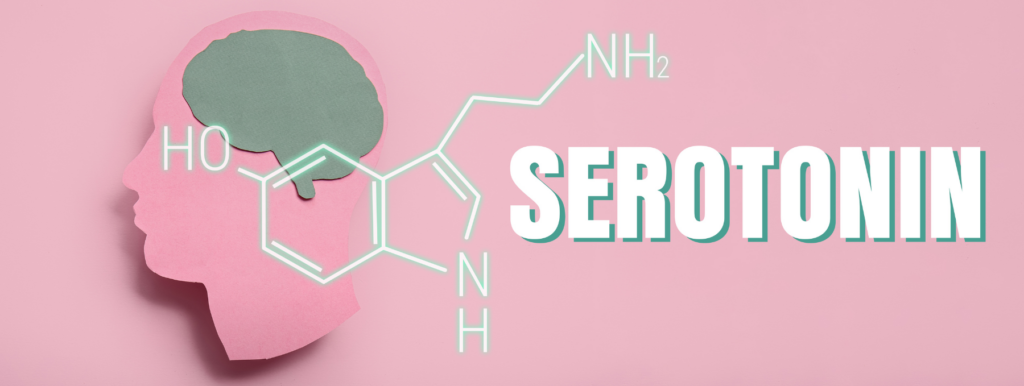
Serotonin is a neurotransmitter that plays an important role in mood, anxiety and behavior regulation. One major reason researchers have focused on serotonin is that selective serotonin reuptake inhibitors (SSRIs)—drugs that increase serotonin signaling—are among the most effective medications for OCD. Even so, it isn’t completely clear how SSRIs produce their benefits. It’s likely not just a matter of reducing fear or anxiety: Serotonin may also affect thinking processes, such as:
- cognitive flexibility (adjusting strategies when information changes)
- prediction errors (how surprised the brain is when outcomes don’t match expectations)
- learning from new or changing information
This study looks at serotonin specifically as a modulator of belief updating. In other words, it treats serotonin not only as an emotional neurotransmitter, but as something that may influence the computational process the brain uses to revise its internal model of the world when new evidence presents itself.
The Experimental Design: SSRI vs. Placebo and a Shifting Environment
In the study, the researchers tested how serotonin might change belief updating by giving study participants either escitalopram (a common SSRI) or a placebo. To measure how well participants updated their beliefs, the researchers utilized a computer task where the situation quietly changed over time. Participants had to learn which responses matched which results, but the rules weren’t fixed—they depended on a hidden internal context (known as the current “state”). As the task shifted to a new state, participants were supposed to notice that the patterns were changing and adjust their choices. If they didn’t update their choices, they kept responding as if the old state was still the one in effect.
This kind of task is sometimes described as a “seasons-style” problem: the correct mapping can switch when the underlying context changes. The exact details differ from study to study, but the basic idea is the same. People infer the current state from the results they see, and the key measure is whether they switch to the new state when it becomes necessary.
How the Researchers Measured Belief Stickiness
The researchers measured belief stickiness using computational modeling, not just accuracy (how often people picked the right option). They fit a mathematical learning model to people’s choices, including factors for how quickly they updated beliefs when new information appeared and how strongly they switched away from an old interpretation. In this model, belief stickiness indicates when people update too slowly, keeping the old explanation even after the evidence suggests they should change course.
 This matters because two people can be equally accurate and choose the right option but still learn differently: The model helps reveal whether someone actually clings to outdated beliefs. Using this measure, the study found that raising serotonin with the SSRI escitalopram reduced belief stickiness. Participants on the SSRI were more likely to switch to the correct inferred “state” when the task’s rules changed.
The result is important because it links a serotonin change to a specific cognitive process—more flexible belief updating—rather than just mood or general anxiety. It also fits computational theories of OCD, which propose that OCD involves difficulty revising beliefs when evidence requires it, suggesting one possible way SSRIs may help.
An OCD-Relevant Twist: Obsession-Related Traits Mattered
Even though participants were not necessarily diagnosed with OCD, the researchers examined relationships between belief stickiness and obsession-related characteristics. The study suggests that individuals with higher obsession-related traits showed more belief stickiness. That means the cognitive persistence construct wasn’t randomly related to behavior—it tracked with traits theoretically closer to OCD.
Most importantly, serotonin’s effect on reducing belief stickiness provides a plausible bridge: SSRIs may reduce the persistence in outdated beliefs that can be especially prominent in people whose psychological profile resembles OCD. This doesn’t mean the study proves the cause of OCD. But it offers a piece of the puzzle: Serotonin appears to influence a cognitive signature that is behaviorally and computationally related to obsession-like traits.
Why This Could Matter for OCD Treatment
To understand the clinical significance of these findings, consider what OCD often looks like in cognitive terms. Many people with OCD experience obsessions that feel compelling: Intrusive thoughts or images generate a sense that something must be dealt with or some action taken. Even after reassurance, the mind can continue to treat the possibility as unresolved. In behavioral terms, compulsions provide relief, but cognitive relief can be temporary if the underlying belief updating remains impaired.
Belief stickiness offers a concrete computational metaphor for that persistent loop. If your brain tends to stay with the old state representation—for example, “something is wrong,” “the threat is still present,” “the certainty has not been achieved”—then it will be harder for new evidence to fully rewrite the internal model. Under such a scenario, SSRIs might help by enabling better switching when the evidence supports it.
There’s also a second implication. Many people think SSRIs work only indirectly by reducing anxiety. However, cognitive inflexibility and reduced belief updating are not identical to anxiety reduction. If SSRIs directly affect the learning/inference mechanism, then symptom improvement could emerge from cognitive changes that happen alongside mood and anxiety shifts.
The Bigger Picture: OCD as a Disorder of Inference?
Researchers increasingly view OCD as a problem with how the brain updates beliefs, not just what people are thinking. From that perspective, belief stickiness is like a learning rule that describes how easily you switch to a new interpretation when evidence changes. If SSRIs lower belief stickiness, serotonin may help the brain balance “staying with the old model” versus “updating to the new one.”
This could explain OCD’s compulsive loop. The brain may keep treating an old explanation as more reliable than it should be, so reassurance never fully counts, and the mind keeps repeating the same doubts. The study doesn’t solve everything, but it supports the idea that serotonin influences the belief-update mechanism that cognitive theories of OCD predict.
What Happens Next?
 If the study’s findings hold up, several future directions become obvious. The most direct next step is to replicate the work in diagnosed OCD patients, testing whether serotonin reduces belief stickiness in this population and whether the size of the change predicts symptom improvements. Researchers will also want to compare the effects of a single dose with chronic SSRI administration to determine whether the underlying cognitive mechanism strengthens or shifts over time.
Because OCD doesn’t present as one uniform condition for everyone, future studies may also aim to map belief stickiness to specific symptom dimensions—such as contamination, symmetry or harm—using computational markers to distinguish subtypes. Finally, if belief updating is indeed a key mechanism, it would be natural to test whether combining SSRIs with behavioral interventions like exposure and response prevention (ERP) produces synergistic effects on belief updating and reduces belief stickiness.
Serotonin Levels and OCD: The Takeaway
This study’s central message is both elegant and clinically suggestive: Increasing serotonin through escitalopram reduces belief stickiness—a tendency to cling to outdated models of reality even when the environment transitions to a new state. Moreover, belief stickiness appears related to obsession-related traits, aligning with cognitive theories that treat OCD as involving altered belief updating. While further work is needed—especially in OCD patients and with longer dosing—the study provides a mechanistic bridge between neurotransmitters and cognitive processes. It nudges us toward a model of treatment where SSRIs don’t just calm emotional distress; they may also tune the brain’s rules for learning from changing evidence.