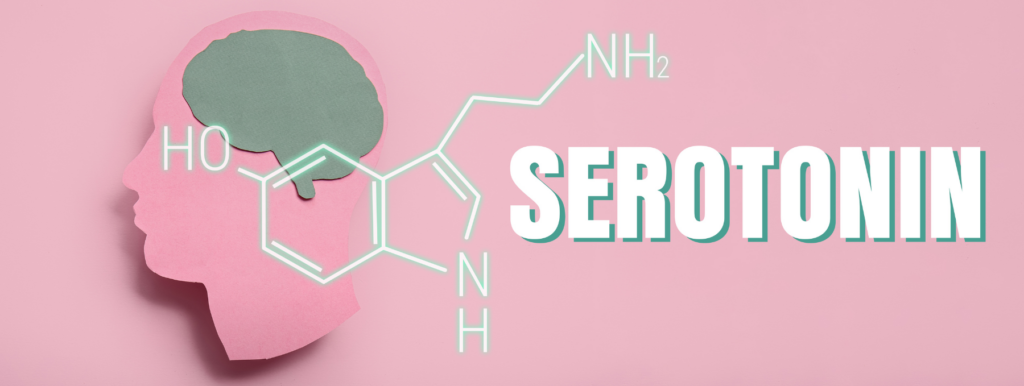

Serotonin is probably best known for its role in mood, but this neurotransmitter does much more than influence how we feel. Serotonin also helps regulate sleep, breathing and muscle activity—including activity in the muscles that help keep the upper airway open. That has led researchers to investigate an intriguing connection between obstructive sleep apnea and serotonin.
Could changes in serotonin signaling contribute to sleep apnea? And could repeated episodes of disrupted breathing, oxygen deprivation and fragmented sleep affect the serotonin system in return? The answer appears to be more complicated than simply saying that sleep apnea causes “low serotonin.” Research suggests that serotonin is involved in the neural mechanisms that control breathing and upper-airway function, but the relationship between serotonin and obstructive sleep apnea (OSA) is complex and not yet completely understood.
What Is Obstructive Sleep Apnea?
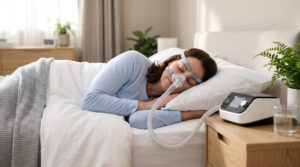 Obstructive sleep apnea is a common sleep disorder in which the upper airway repeatedly becomes narrowed or blocked during sleep. When this happens, breathing may stop completely for a period of time or become significantly reduced. These episodes can cause oxygen levels to fall and carbon dioxide levels to rise. The brain then responds by briefly increasing breathing effort and often causing a brief arousal from sleep.
These disruptions may happen many times per hour, sometimes without the person being aware of them. As a result, someone with untreated OSA may experience excessive daytime sleepiness, morning headaches, difficulty concentrating, irritability and other consequences of chronically disrupted sleep. The condition is influenced by multiple factors, including airway anatomy, body weight, age, genetics and the way the brain controls breathing. Serotonin may be one piece of this complicated system.
What Does Serotonin Have to Do With Breathing?
Serotonin, also known as 5-hydroxytryptamine or 5-HT, is a chemical messenger that helps nerve cells communicate. Although it is often discussed in connection with mood and depression, serotonin is involved in numerous functions throughout the body. Within the brainstem, serotonin-producing neurons are involved in regulating breathing and the body’s response to changes in oxygen and carbon dioxide. Serotonin also influences the muscles that help keep the upper airway open.
One particularly important muscle is the genioglossus, a major muscle of the tongue that helps prevent the upper airway from collapsing during breathing. Serotonergic nerve pathways provide excitatory signals to the motor neurons that control this and other upper-airway muscles. In other words, serotonin signaling can help provide some of the neural drive that keeps the airway open. This becomes especially relevant during sleep.
Serotonin Activity Changes During Sleep
The brain does not maintain exactly the same level of neurotransmitter activity throughout the day and night. Serotonergic activity involved in respiratory control decreases as a person transitions from wakefulness into sleep and becomes particularly low during rapid eye movement (REM) sleep. For most people, these normal changes do not cause the airway to collapse. But in someone who already has anatomical or physiological factors that make the airway vulnerable, the reduction in neural stimulation of the upper-airway muscles may contribute to obstruction.
This helps explain why researchers have become interested in serotonin as one of the mechanisms involved in OSA. Importantly, however, serotonin is only one part of the equation. Airway anatomy, muscle responsiveness, breathing control, arousal threshold and other neurological and physiological factors also influence whether someone develops sleep apnea.
Does Sleep Apnea Cause Low Serotonin?
There is not enough evidence to say that obstructive sleep apnea simply causes low serotonin. Serotonin in the brain is regulated through a complicated network of neurons, receptors and transporters, and serotonin levels measured in the blood do not provide a straightforward measurement of serotonin activity in the brain. Researchers have found evidence of changes in serotonergic signaling associated with OSA, but findings have not been consistent enough to establish a simple “OSA equals serotonin deficiency” relationship.
A 2024 review concluded that the connection between OSA and serotonergic signaling is complex and that important questions remain about how different serotonin receptors and pathways contribute to the condition. This distinction matters because it is tempting to interpret symptoms such as fatigue, low mood or poor concentration as evidence of low serotonin. Those symptoms can occur for many reasons, including the sleep disruption and intermittent hypoxia caused by OSA itself.
Could Serotonin Affect the Risk of Sleep Apnea?
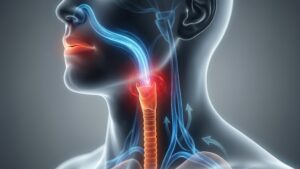 Because serotonin helps regulate upper-airway muscle activity and breathing, differences in serotonergic signaling could potentially influence how vulnerable a person’s airway is to collapse during sleep. Researchers have studied several serotonin receptor subtypes and their effects on airway muscles. Some experimental findings suggest that stimulating certain serotonin pathways can increase upper-airway muscle activity, while blocking others can make the airway more susceptible to collapse. Much of this research, however, comes from laboratory and animal studies, and the effects of manipulating serotonin in humans are more complicated. There is also interest in whether genetic differences involving serotonin transporters and receptors could contribute to individual susceptibility to sleep-disordered breathing. These findings are still an area of research rather than something currently used to diagnose or predict OSA in routine medical practice.
Is There a Connection Between Serotonin and Depression?
The connection becomes even more interesting when mood enters the picture. People with obstructive sleep apnea have an increased prevalence of depression and other mood symptoms. A meta-analysis of studies involving untreated OSA estimated that clinical depression was present in approximately 23% of participants, although the researchers emphasized that the relationship is complex.
Serotonin may be relevant because it participates in mood regulation as well as sleep and respiratory control. However, this does not mean that depression in someone with sleep apnea is necessarily caused by low serotonin. Repeated awakenings, poor-quality sleep, intermittent drops in oxygen, daytime fatigue and the other effects of untreated OSA can all affect mood and cognitive function. Depression and sleep apnea can also coexist independently. In other words, there may be several overlapping pathways rather than one simple cause.
Can Treating Sleep Apnea Improve Mood?
There is evidence that treating OSA can improve quality of life and, in some people, depressive symptoms. However, the results aren’t completely consistent. Some studies have found improvements in depressive symptoms following treatment with continuous positive airway pressure (CPAP), the standard treatment for many people with OSA. A meta-analysis of randomized controlled trials concluded that CPAP can improve depressive symptoms in people with OSA, although the magnitude of benefit varies.
Other randomized research has found more limited effects. For example, one analysis of two sham-controlled trials found no significant overall difference in depression scores after three months of CPAP, although participants with baseline depressive symptoms who used CPAP consistently had greater reductions in symptoms. This reinforces an important point: treating sleep apnea may improve mood for some people, but it should not be viewed simply as a way to increase serotonin.
Could Serotonin-Based Treatments Help Sleep Apnea?
Because serotonin is involved in airway control, researchers have investigated medications that affect serotonin receptors and serotonin reuptake as possible treatments for obstructive sleep apnea (OSA). The idea is intriguing: rather than simply treating the airway mechanically, medication might improve the neurological signals that help keep the airway open. So far, however, serotonergic medications are not established substitutes for standard OSA treatments. Studies have produced mixed results, and their effects appear to depend on the specific medication, serotonin receptor involved and characteristics of the individual patient. Much of this research remains experimental.
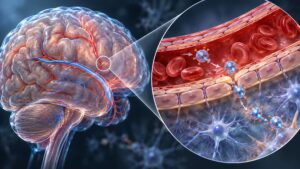 Taking serotonin itself is not a practical way to treat sleep apnea. Serotonin does not readily cross the blood-brain barrier, so taking it as a supplement would not be a straightforward way to increase serotonin signaling in the brain. Likewise, supplements marketed as “serotonin boosters” should not be considered treatments for OSA. For people with sleep apnea, treating the underlying breathing disorder remains the priority. Established approaches include CPAP, oral appliances, positional therapy and weight management when appropriate, along with other treatments based on the individual’s condition. Serotonin-based therapies may continue to be an area of research, but they are not currently a replacement for proven OSA treatments.
Understanding the Connection Between Sleep Apnea and Serotonin
There is a connection between obstructive sleep apnea and serotonin, but it is more complex than simply saying that OSA causes low serotonin. Serotonin helps regulate breathing and upper-airway muscle activity, while the repeated oxygen fluctuations and sleep disruption associated with OSA may also affect serotonergic signaling. Because serotonin also plays a role in mood, researchers are interested in its possible connection to depression and other symptoms associated with OSA. However, fatigue, poor concentration and low mood are not necessarily signs of a serotonin deficiency. For now, sleep apnea is best understood and treated as a breathing disorder, while the role of serotonin remains an active area of research.