
Although it is a widely discussed condition, ADHD can feel confusing, especially when it comes to the question of whether brain chemicals like serotonin are involved. There is indeed a relationship between serotonin and ADHD, but ADHD is not simply a serotonin problem. Instead, ADHD involves differences in how the brain regulates attention, motivation, impulse control and activity levels—processes that involve several chemical systems at once, including dopamine, norepinephrine and serotonin. This overlap may help explain why ADHD often comes with mood and sleep difficulties, and why treatments that affect serotonin may help certain symptoms even if they don’t directly target ADHD.
ADHD: Beyond an Inability to Focus
 Most people are familiar with the fact that ADHD can involve trouble focusing, staying organized, remembering tasks and controlling impulses. But ADHD is broader than inattention alone. It can actually include all of the following:
- Inattention: difficulty sustaining attention, organizing tasks, finishing work or following through
- Hyperactivity/restlessness: feeling driven, fidgety, or unable to sit still
- Impulsivity: interrupting, acting quickly without thinking through consequences or emotional “blips” that feel sudden and hard to regulate.
These symptoms aren’t just behavior problems; they reflect differences in brain networks that help you manage goals, time, effort and reactions. In day-to-day terms, someone with ADHD often experiences a mismatch between what they want to do and what their brain reliably enables them to do—especially for tasks that are boring, delayed or low-reward. That’s why ADHD can affect school, work, relationships and self-esteem. It’s also why treatment usually aims to improve overall functioning, not just to make the person “calmer.”
Serotonin: a Chemical Messenger With Many Jobs
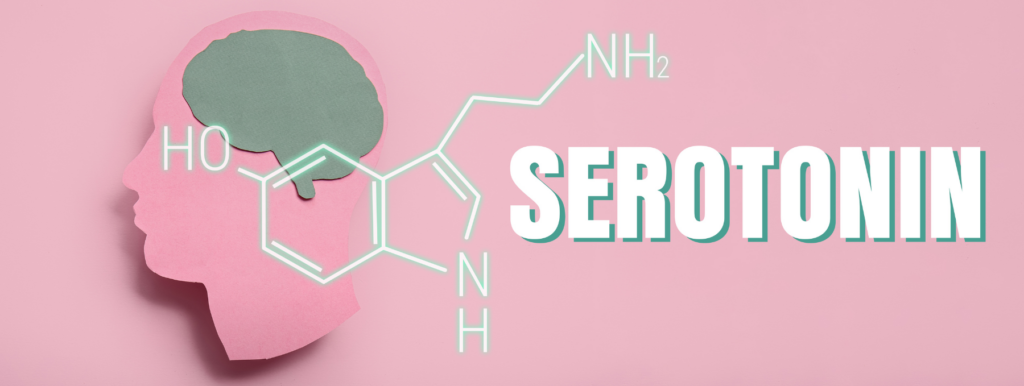
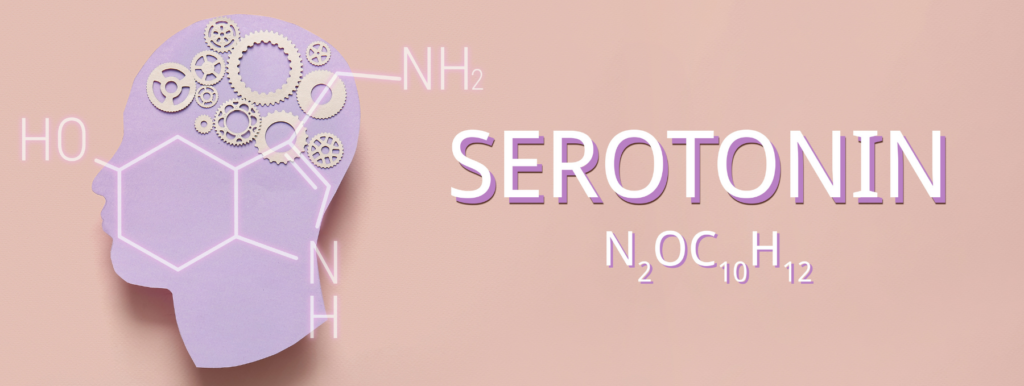
Serotonin is sometimes described as a “mood chemical,” and that’s not wrong—but it’s incomplete. Serotonin is a neurotransmitter, meaning it’s a messenger used by nerve cells, and it influences a wide range of body and brain functions. These include mood and emotional regulation, anxiety, how the body responds to stress, sleep and wake cycles, appetite and digestion as well as learning and memory. Serotonin also contributes to impulse control and behavioral inhibition, though it works alongside other systems.
Because many brain circuits use serotonin signaling, changes in serotonin function—due to genetics, brain development, life experience or other medical factors—can affect mood, anxiety and sleep. Those areas are closely connected to ADHD, which is why serotonin often comes up in discussions about the condition. Still, serotonin isn’t the only chemical involved in ADHD; dopamine and norepinephrine also play major roles in attention, motivation and arousal. In other words, the brain works with teams of chemical signals rather than relying on just one.
Serotonin and ADHD: What’s the Relationship?
There are a few major ways serotonin can be linked to ADHD. None of these imply that serotonin alone causes ADHD. Instead, they describe how serotonin may contribute to certain patterns seen in ADHD.
1) ADHD often comes with mood and anxiety differences
Many people with ADHD also struggle with anxiety, depression or low mood, irritability and strong reactions to frustration. Since serotonin affects mood and anxiety, differences in serotonin signaling may help explain these symptoms. Even when core ADHD symptoms improve with stimulant treatment, anxiety or mood issues may persist, suggesting more than one brain system is involved. It’s important to understand that with ADHD, comorbid conditions are common but not guaranteed. Some people with ADHD have minimal mood symptoms, while others experience significant anxiety or depression.
2) Sleep problems are common in ADHD—and serotonin is involved
Sleep is a major challenge for many people with ADHD. Those with ADHD may struggle with falling asleep, staying asleep and keeping a regular sleep schedule. Serotonin helps regulate the sleep-wake system and supports transitions between sleep states. It also acts as a precursor to melatonin, a hormone that controls the body’s circadian rhythms. Because sleep directly affects attention, mood and impulse control, differences related to serotonin could contribute to ADHD symptoms, while ADHD-related behaviors (like late-night stimulation or an overactive mind) can also disrupt sleep. This can become a feedback loop where poor sleep worsens attention and emotional regulation, which then makes it harder to sleep well.
3) Serotonin and inhibition systems may overlap
ADHD is often described as involving difficulties with executive function: skills like planning, prioritizing, self-monitoring and inhibiting inappropriate responses. Serotonin participates in behavioral inhibition and the regulation of impulsive behaviors, but it does not act alone. Dopamine, norepinephrine and other neurotransmitters also contribute to inhibitory control. In other words, serotonin may affect the mind’s “brakes,” but the brakes system is made of multiple interconnected components. If any part of the circuitry is altered—by development, genetics, stress or neurobiology—impulsivity can look more intense.
 4) Brain development and connectivity are shaped by multiple neurotransmitter systems
ADHD is strongly associated with neurodevelopmental differences. This means that during brain development, multiple neurotransmitter systems and networks mature differently. Serotonin systems interact with dopamine and norepinephrine systems, and those systems interact with attention and reward circuits. As a result, researchers may find differences in serotonin signaling in some studies of ADHD, but the overall story is complex: Serotonin findings might reflect downstream effects of broader network differences rather than a single root cause.
Serotonin and ADHD: What Does the Research Show?
When it comes to serotonin and ADHD, it is a common misconception that serotonin levels are simply low in ADHD and that in order to diagnose the condition, one can simply measure serotonin levels. However, the reality is more complicated. Research sometimes finds differences in certain serotonin-related markers between people with ADHD and people without ADHD–for example, measurements tied to serotonin transporter function (how serotonin is reabsorbed) or levels of serotonin metabolites. However, findings aren’t always consistent across studies. Some studies show differences, while others don’t, and results can vary depending on factors like age, whether someone is taking medication, coexisting conditions and the methods used.
Even when serotonin differences do appear, they may be part of a broader pattern involving multiple neurotransmitters, and dopamine and norepinephrine are often viewed as more central to the core ADHD symptoms. This inconsistency doesn’t mean serotonin’s role is imaginary; it reflects that ADHD is biologically complex and not one single uniform condition.
Do Serotonin-Targeting Medications Help ADHD?
The main medications used to treat the core symptoms of ADHD are usually stimulants such as methylphenidate or amphetamine-based medications and non-stimulants such as atomoxetine or certain alpha-2 agonists. These mainly work by affecting dopamine and norepinephrine signaling. SSRIs, or selective serotonin reuptake inhibitors, are different: They increase serotonin signaling and are commonly prescribed for depression and anxiety, and sometimes for obsessive-compulsive symptoms.
Serotonin-targeting medications can matter in ADHD when someone has ADHD alongside anxiety, depression or OCD because improving those conditions can indirectly improve daily functioning. But SSRIs are generally not first-line treatments for the core attention and impulsivity symptoms of ADHD. When they do help, the effects are often smaller or less consistent than treatments specifically designed for ADHD. Clinicians often think of ADHD treatment as “layer by layer”: they first target core ADHD symptoms, and then they address comorbid mood, anxiety or sleep problems where serotonin and related sleep biology may play a larger role.
The Bottom Line: Why Serotonin Might Matter
Serotonin may matter in ADHD even though dopamine and norepinephrine are often more directly tied to attention and executive function. That’s because many of ADHD’s secondary challenges can strongly affect everyday functioning. When anxiety is high, it can reduce working memory and make focus harder. When sleep quality is poor, attention and emotional regulation can suffer. When irritability is strong, it can increase conflict at home or work and when impulsivity is intensified by emotional dysregulation, the consequences can build up faster. In that sense, serotonin can act a bit like an environmental factor in a larger system: It may not be the only ingredient, but it can influence whether the overall system runs smoothly.
 A practical way to make sense of the connection is to separate three layers: core ADHD symptoms, which are often most closely linked to dopamine/norepinephrine-related networks; common comorbid patterns like mood, anxiety and sleep, which may be more strongly influenced by serotonin and stress- or sleep-related biology; and treatments, where ADHD-specific medications are typically aimed at core symptoms while serotonin-targeting medications may help comorbid anxiety, depression, OCD and sometimes sleep. This framing helps avoid oversimplifying ADHD while still reflecting that serotonin plays a real role in the broader picture.
Serotonin and ADHD: A Nuanced Connection
The bottom line is that serotonin and ADHD are related, mainly because serotonin influences mood, anxiety and sleep—things that strongly affect how ADHD shows up day to day. Research also suggests serotonin signaling may differ in some people with ADHD, but results are mixed, and ADHD isn’t simply a single-chemical imbalance. Serotonin is more likely to contribute to supporting features of ADHD like emotional regulation difficulties, anxiety and sleep problems than to fully explain the core attention and impulse symptoms.