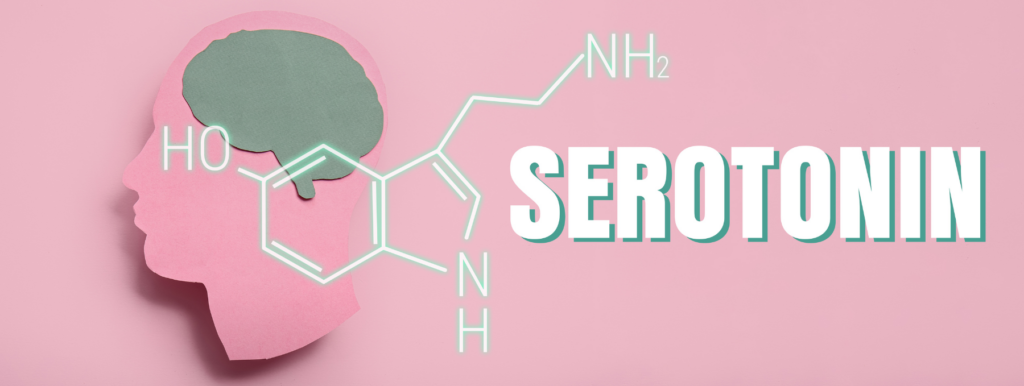
When people assume that antidepressants such as SSRIs increase serotonin, it is tempting to imagine serotonin as a single substance circulating throughout the body, with antidepressants simply causing more of it to reach the brain. The actual biology regarding antidepressants and serotonin is considerably more interesting. Serotonin (5-HT) plays different roles depending on where in the body it is found. In the brain, it helps regulate mood, anxiety, sleep, appetite and other functions. Outside the brain, serotonin is involved in digestion, blood vessels, immune function and blood clotting.
This helps explain an interesting feature of SSRIs: they can increase serotonin signaling in the brain while reducing the amount of serotonin stored in blood platelets. They can also affect serotonin signaling in the gut, which may contribute to side effects such as nausea or changes in bowel habits. To understand why, it helps to look at how serotonin is produced, transported and used throughout the body—and how antidepressants change these processes.
Why Brain Serotonin and Body Serotonin Are Not the Same
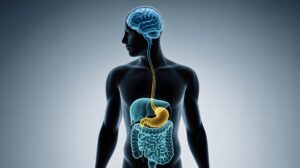 The brain and the rest of the body maintain largely separate serotonin systems. Serotonin itself does not freely cross the blood-brain barrier, meaning that serotonin circulating in the bloodstream does not simply enter the brain and become brain serotonin. Peripheral (body) serotonin is produced predominantly by specialized cells in the gastrointestinal tract called enterochromaffin cells. Much of the serotonin released into the circulation is subsequently taken up and stored by platelets. Platelets cannot synthesize serotonin themselves; they obtain it from the circulation through the serotonin transporter, or SERT.
The brain has its own serotonergic neurons. These neurons synthesize serotonin and release it into synapses, where it interacts with serotonin receptors on neighboring cells. SERT then helps terminate that signal by transporting serotonin back into the neuron. Thus, there is not one giant reservoir of serotonin that antidepressants turn up or down. There are interconnected but substantially distinct serotonin systems in the brain, gut, blood and other tissues.
How SSRIs Change Serotonin Signaling
SSRIs—including medications such as sertraline, fluoxetine, escitalopram, citalopram and paroxetine—block the serotonin transporter SERT. In the brain, this means that serotonin released by serotonergic neurons is taken back up more slowly. The immediate result is increased serotonin availability in the extracellular space and altered stimulation of serotonin receptors. But SERT is not unique to the brain. It is also present on platelets and in peripheral tissues. Consequently, an SSRI affects serotonin handling outside the brain as well. This is where things become counterintuitive.
In the brain, blocking SERT reduces serotonin reuptake, allowing serotonin to remain available longer and increasing serotonergic signaling. In platelets, however, blocking SERT reduces the uptake of serotonin from the bloodstream, resulting in less serotonin being stored inside the platelets. These effects may seem contradictory, but they reflect the different roles serotonin and SERT play in different parts of the body.
Why SSRIs Can Lower Platelet Serotonin
Platelets circulate through the bloodstream and act as an important reservoir for peripheral serotonin. Serotonin is taken up from plasma through SERT and stored in platelet dense granules. When platelets become activated, they can release some of that stored serotonin, which contributes to platelet activation and aggregation. When someone takes an SSRI over time, SERT on platelets is inhibited. The platelets therefore have less ability to take up serotonin from the blood. With chronic treatment, their internal serotonin stores can become substantially depleted. Importantly, this does not mean that taking an SSRI necessarily causes a dramatic increase in total serotonin throughout the bloodstream. The effect is more accurately described as a change in serotonin distribution and handling: platelets are less able to accumulate and store serotonin.
Clinical studies have associated SSRIs and related serotonin-reuptake inhibitors with an increased risk of bleeding in some circumstances, particularly when they are combined with medications that already affect clotting, such as anticoagulants, antiplatelet drugs or NSAIDs. Serotonin is not the only molecule involved in clotting, but it can amplify platelet activation. The idea is that if platelet serotonin stores are reduced, platelet-driven hemostasis may be altered. The absolute risk for an individual person is generally not large, but the interaction can become clinically important. The precise mechanism is probably more complicated than platelet serotonin alone, and recent reviews emphasize that experimental findings concerning SSRI effects on platelet function are not completely consistent.
The Gut: Another Major Serotonin System
 The gastrointestinal tract contains a remarkably large serotonergic system. Enterochromaffin cells in the intestinal lining produce most peripheral serotonin, which helps regulate intestinal movement, secretion, sensation and communication between the gut and nervous system. This provides another reason SSRIs can cause gastrointestinal symptoms. When serotonin signaling is altered in the gut, intestinal activity and sensory signaling can change. Some people taking an SSRI experience nausea, diarrhea, abdominal discomfort or changes in bowel habits, particularly during the early stages of treatment.
These effects aren’t necessarily evidence that serotonin levels are “too high” everywhere. They reflect the fact that serotonin receptors and transporters participate in normal gastrointestinal physiology. A drug designed to alter serotonin signaling in the nervous system inevitably interacts with some of the same molecular machinery elsewhere in the body. In other words, the gut is not merely experiencing an accidental side effect of a brain medication. It has its own substantial serotonin system, which can also be affected by antidepressants.
Why Central and Peripheral Effects Can Diverge
One of the most useful concepts here is the idea of compartmentalization: the idea that the same protein can have different jobs in different parts of the body. For example, SSRIs block a protein called SERT, which normally moves serotonin into cells. In brain cells, SERT helps remove serotonin from the space between nerve cells after it has been released. When an SSRI blocks SERT, serotonin stays in that space longer, allowing it to have a longer-lasting effect.
Platelets, however, use SERT differently. They don’t release serotonin between nerve cells. Instead, they use SERT to take serotonin from the blood and store it. When an SSRI blocks SERT in platelets, the platelets can’t take up as much serotonin, so their serotonin stores become lower. In other words, blocking the same protein can have different effects depending on the type of cell involved.
What About SNRIs and Other Antidepressants?
SSRIs aren’t the only antidepressants that affect serotonin. SNRIs such as venlafaxine and duloxetine inhibit serotonin reuptake as well as norepinephrine reuptake. Consequently, they can also affect peripheral serotonin handling, including platelet serotonin.
Tricyclic antidepressants vary considerably in their pharmacology. Some strongly inhibit serotonin and norepinephrine reuptake, while others have relatively weaker serotonergic effects. Other antidepressants have very different relationships with serotonin. Bupropion, for example, primarily affects norepinephrine and dopamine rather than directly inhibiting serotonin reuptake. Mirtazapine modifies serotonin signaling through receptor effects rather than simply blocking SERT in the same manner as an SSRI.
This is one reason it is misleading to classify antidepressants solely according to whether they “increase serotonin.” Different medications can modify different components of the serotonergic system, and those differences can influence both therapeutic effects and side effects.
Does Peripheral Serotonin Explain Antidepressant Effects?
The antidepressant effects of SSRIs cannot be adequately explained by simply saying that they increase serotonin in the brain. Serotonin transporter blockade occurs relatively quickly, while meaningful changes in mood and anxiety often take considerably longer. Researchers therefore believe that downstream adaptations involving serotonin receptors, intracellular signaling, neural circuits and neuroplasticity contribute to the therapeutic response of antidepressants like SSRIs.
Likewise, peripheral serotonin is unlikely to be irrelevant. The gut, immune system, cardiovascular system and brain communicate extensively, and serotonin participates in several of these systems. But the relationship between peripheral serotonin and mental health is complex and remains an active area of research. It is therefore better to think of antidepressants as modifying serotonergic signaling across several biological compartments, rather than as simply raising a single body-wide serotonin concentration.
Antidepressants and Serotonin: Understanding the Bigger Picture
 Labeling an SSRI as a “serotonin-boosting antidepressant” is convenient, but it oversimplifies what these types of medications actually do. SSRIs can increase serotonin signaling in the brain while reducing serotonin uptake and storage in platelets. They can also affect serotonin in the gut, sometimes causing digestive symptoms. These different effects occur because serotonin has different roles in different parts of the body. This is also why blood serotonin levels don’t directly tell us what’s happening with serotonin signaling in the brain.
Rather than thinking of serotonin as a single volume knob that “turns up” serotonin, it is more accurate to think of it as a complex network that works differently across different cells and tissues. SSRIs affect that network by changing how serotonin is transported and how cells respond to it. This complexity is one reason depression is no longer understood simply as having too little serotonin. SSRIs do affect serotonin systems, but their effects are much broader and depend on where in the body they occur. In short: SSRIs increase certain types of serotonin signaling in some places while changing how serotonin is stored and handled in others.